
New Advisory Board Member: Han Cheng
We are proud to announce that Dr. Han Cheng (MPIWG) is now part of our International Advisory Board.
We are proud to announce that Dr. Han Cheng (MPIWG) is now part of our International Advisory Board.
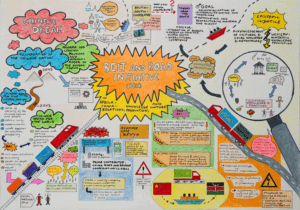
Complex ideas are sometimes better communicated visually. In this podcast, Linda Ammann describes how she employed graphic recording to describe and connect elements of her research.
The third edition of the HU’s Indonesian Studies Day took place on 15 January 2026. Co-organised by Claudia Derichs, the event this time centred around sustainability, and of course featured traditional Indonesian performances and snacks.

The second in our series of online Brown Bag Talks took place on 15 January 2026. Katja Mileke (bicc) discussed her work in Afghanistan since the Taliban’s return to power.
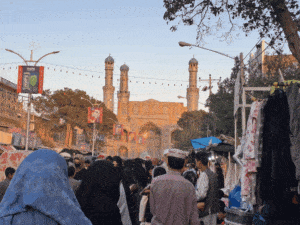
On 28 November 2025, Katja Mielke will give a short and accessible German-language talk about the BRI in Afghanistan. From noon CET, anyone interested can listen to the 20-minute presentation and ask questions afterwards.
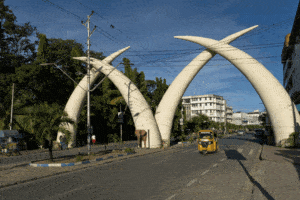
In 2017, Kenya’s Standard Gauge Railway (SGR) – a flagship project of China’s Belt and Road Initiative – was unveiled as a symbol of national progress. How has this affected the lives of ordinary people in Mombasa?
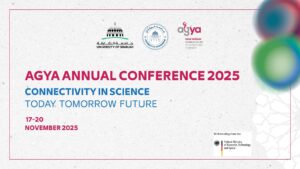
Our co-speaker Claudia Derichs will participate in the panel discussion ‘Connectivity in Science: Arab-German Research Cooperation’, which forms part of the public programme at the annual conference of the Arab-German Young Academy of Sciences and Humanities.

We’re proud to announce that Fiona Katherine Naeem has now published her PhD dissertation “Pamiri Lifeworlds: Narratives of Rupture in Gorno-Badakhshon Autonomous Oblast, Tajikistan”.

John Njenga Karugia‘s documentary flm screened at various locations in Germany and Austria.
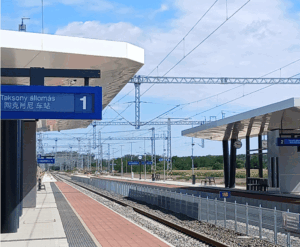
Does China’s growing role in Eastern Europe challenge the EU’s approach to promoting development in the region? Tanja Börzel, Julia Langbein, Lunting Wu & Valentin Krüsmann explore this question in their open-access article.