
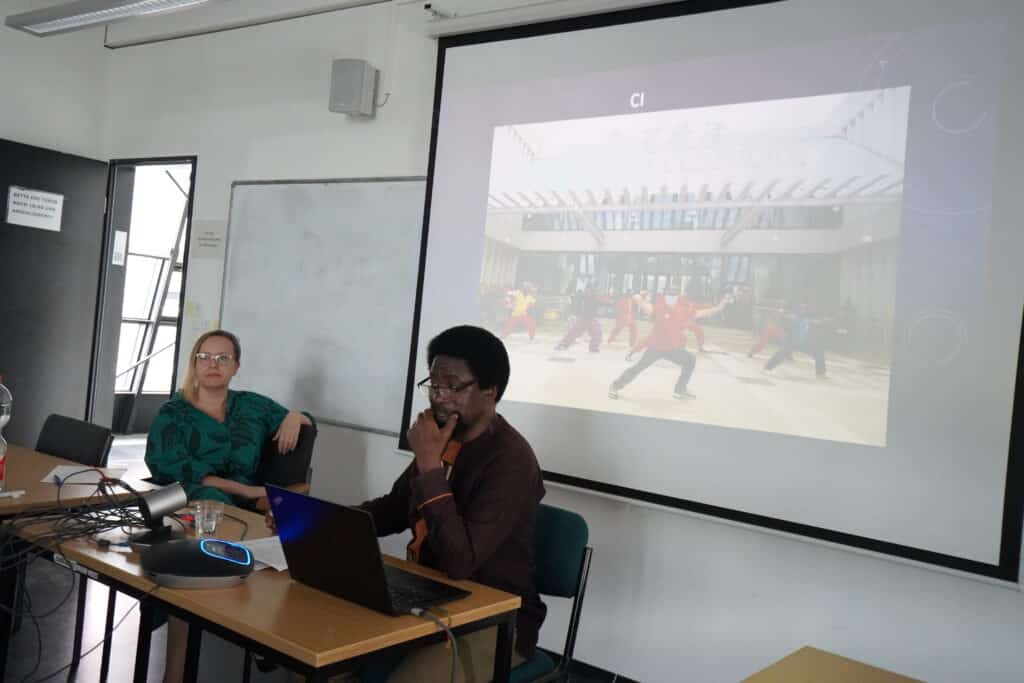
Localizing Confucius Institutes Through African Languages: The Confucius Institute in Dar es Salaam
John Njenga Karugia discusses the Silk Road Talk given by De:link//Re:link fellow Prof. Dr. Aldin Mutembei in June 2023.
John Njenga Karugia discusses the Silk Road Talk given by De:link//Re:link fellow Prof. Dr. Aldin Mutembei in June 2023.
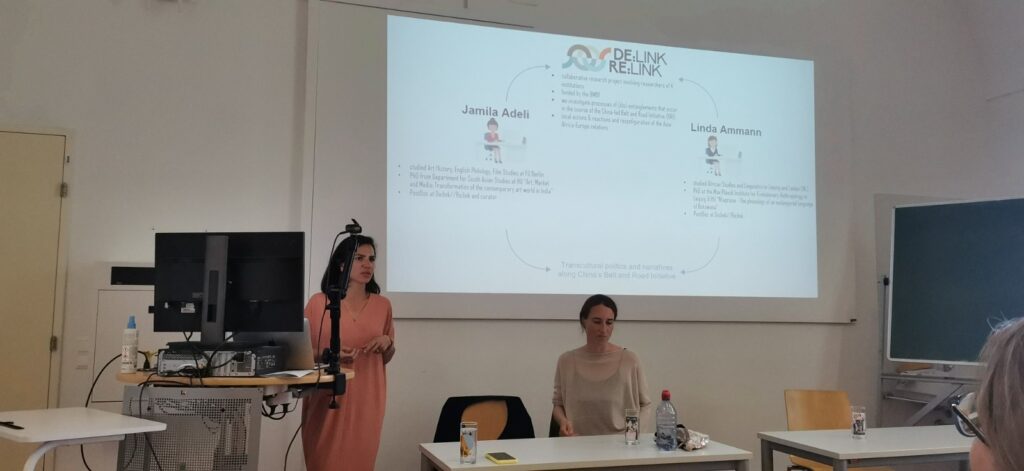
On June 15, 2023 Jamila Adeli and Linda Ammann gave a presentation at the University of Vienna. Under the title “The power of transcultural politics along China’s Belt and Road Initiative: The promise of culture in Sino-African relations” we introduced a decidedly (trans)cultural perspective on the BRI and its reciprocal relations in so-called new silk
Talk: The Power of Transcultural Politics Along China’s BRI Read More »
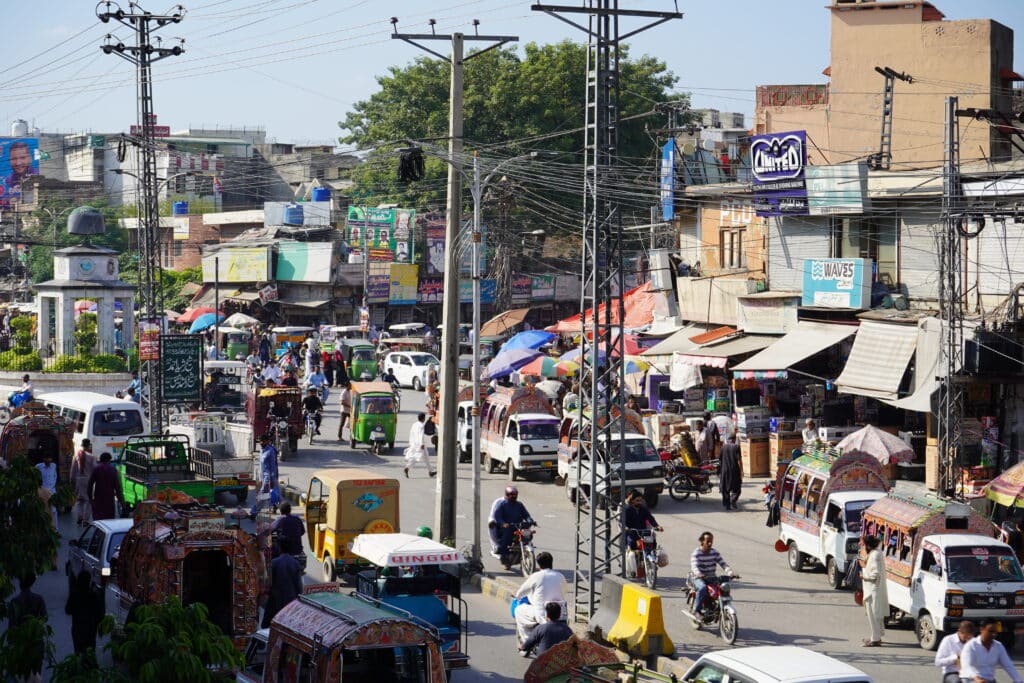
Pakistan desperately needed investments in its energy sector because constant electricity blackouts and load shedding were gradually crippling its economy. The 2015 launch of the China Pakistan Economic Corridor (CPEC) which is part of the Belt and Road Initiative (BRI) brought hope to 236 million Pakistanis who make up the world’s fifth largest nation by population. Chinese companies increased electricity production through many new power production projects.
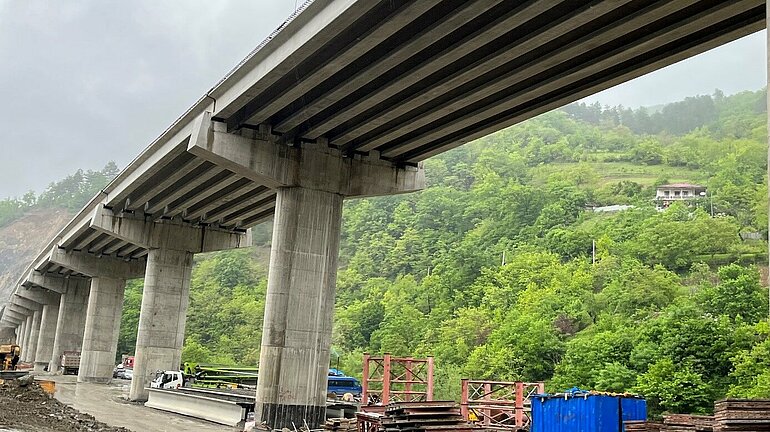
Belts, roads and initiatives – in plural – are being forged through China’s global infrastructural engagement. Countless ports, highways and railways are constructed, reconstructed and rehabilitated for connecting people in Asia with Africa and Europe for seamless trade and economic development. In this transregional roundtable, we bring these aspirations down to earth. We trace emerging
Our research fellow Prof. Dr. Aldin Mutembei will give the next in our Silk Road series of talks on 15 June from 6 to 8 p.m. It will take place online and in Room 410, Invalidenstraße 118.

A decade on, China through the Belt and Road Initiative (BRI) continues to occupy minds and political geographies. Unveiled a decade ago at the Nazarbayev University Campus in Astana, Kazakhstan, the BRI remains an unprecedented undertaking for seamlessly interconnecting people and places in Asia with Africa and Europe through multifarious large-scale infrastructure. Drawing on published
Museums seem to be everywhere in post Soviet Central Eurasia. From magnificent state buildings to regional, private, and ‘house’ museums, they all attest to an interest in and an urge to document and shape collective, national and public discourses of identity that relate to specific visions of the past. By engaging a variety of material,