
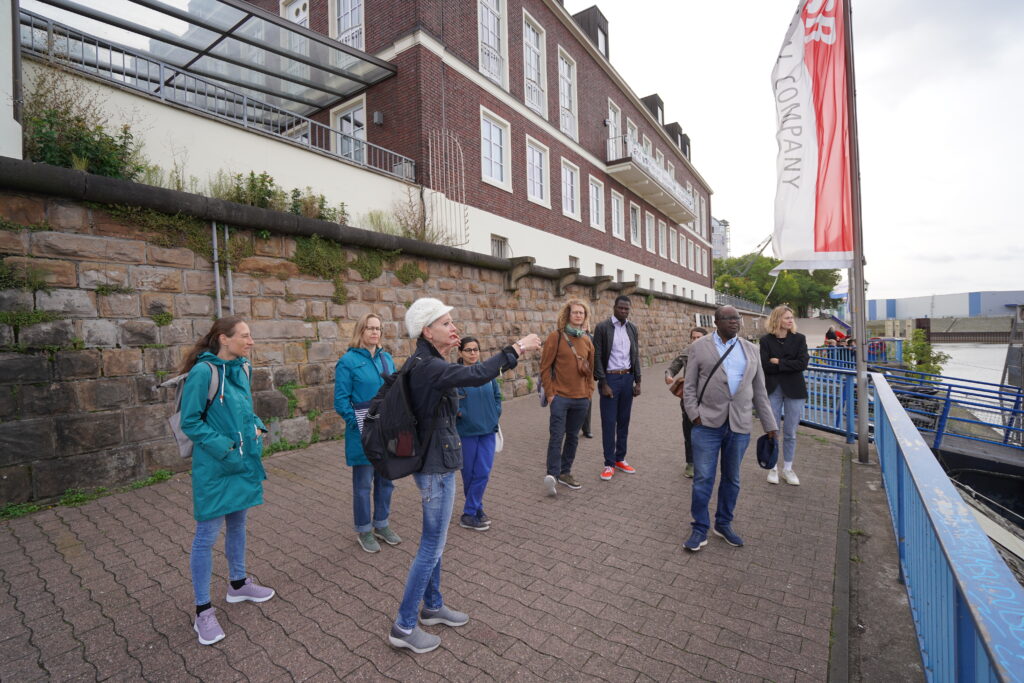
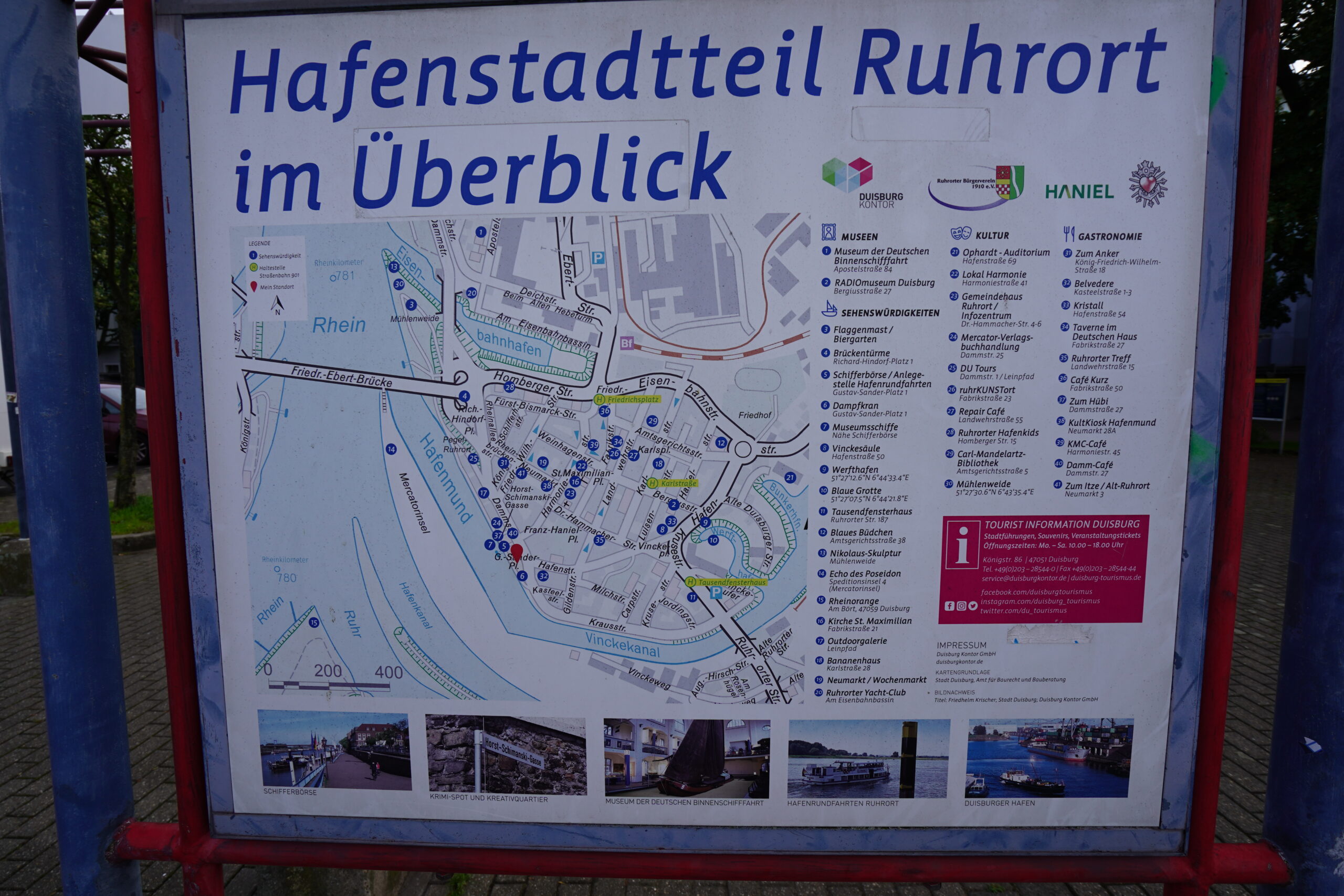
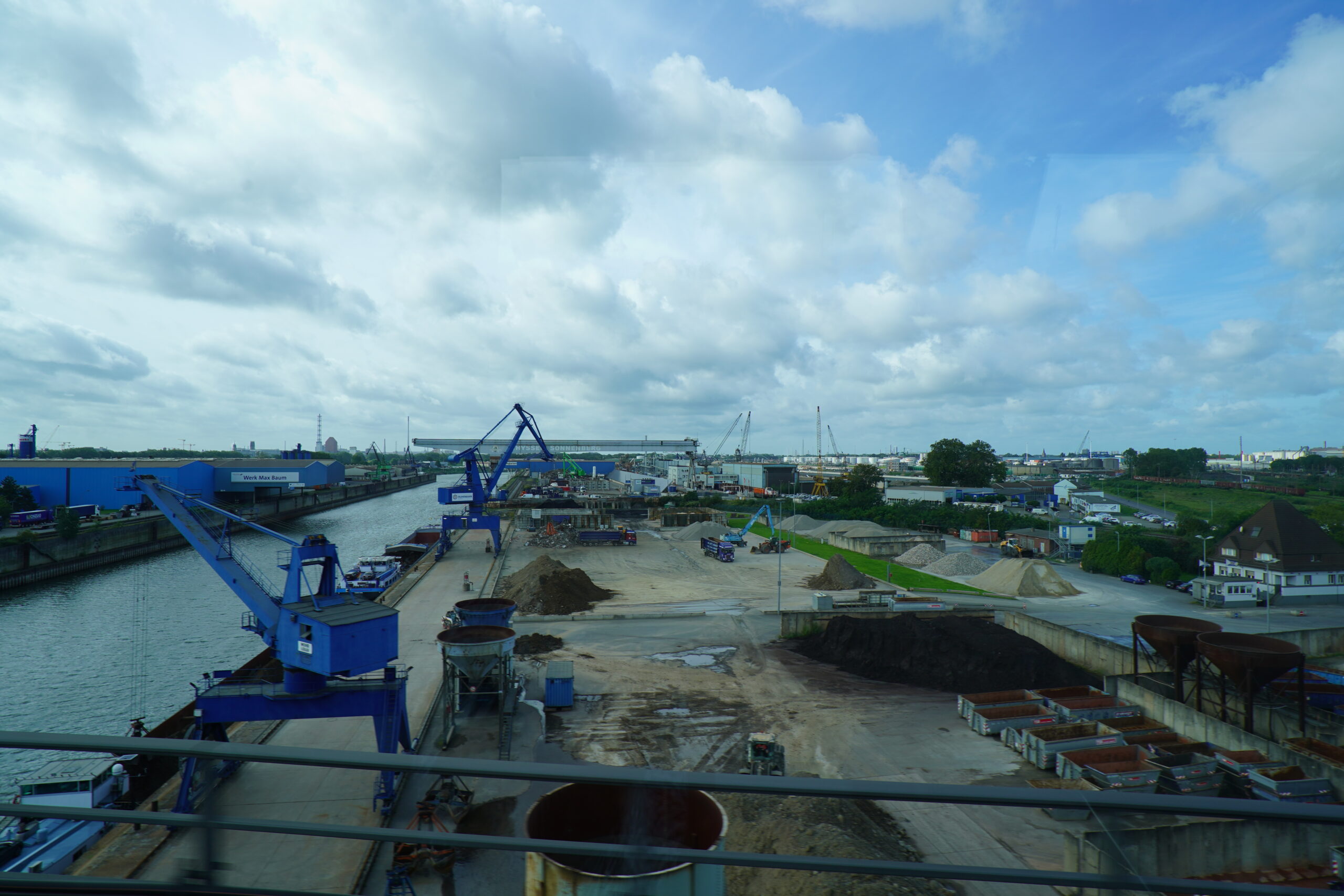
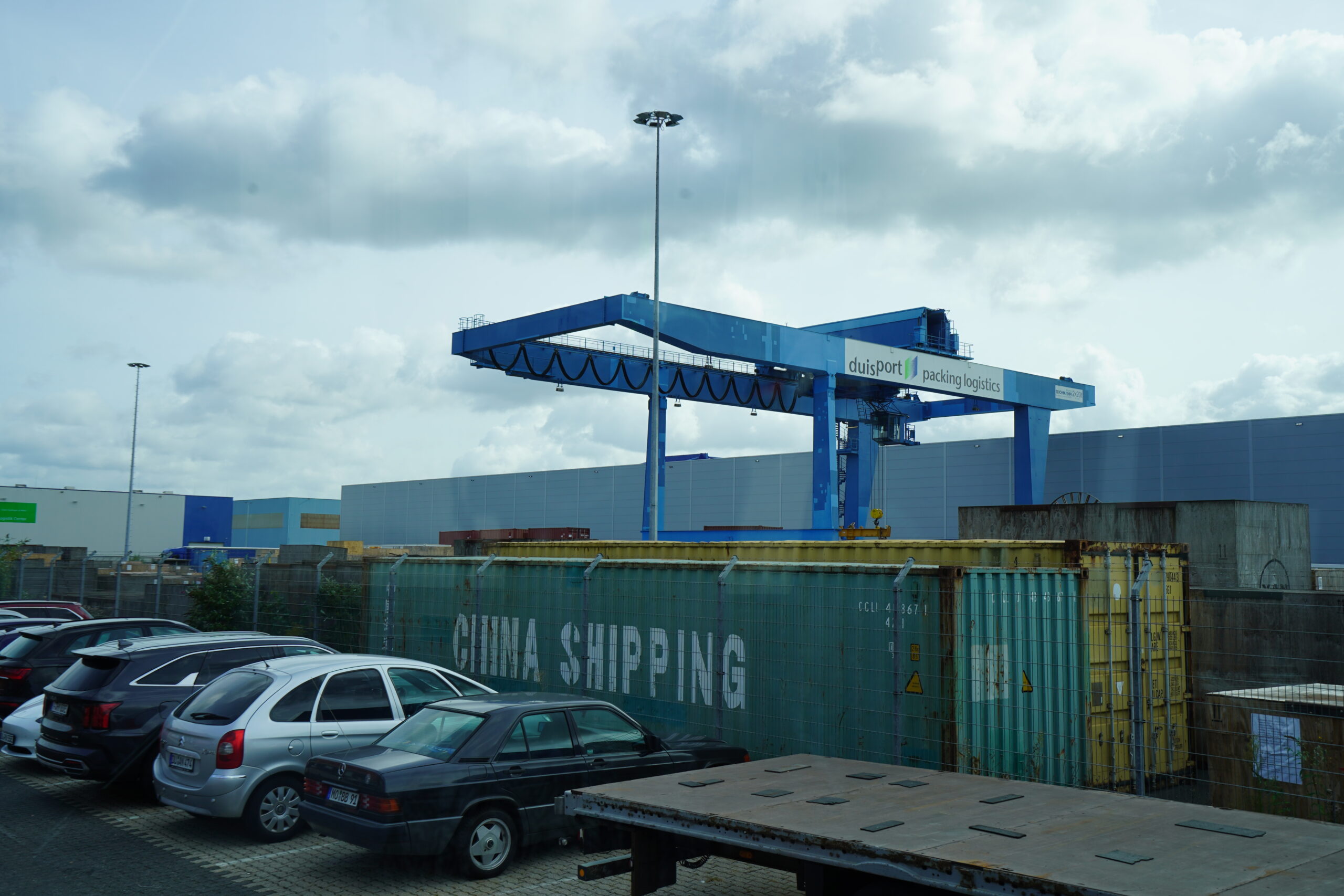
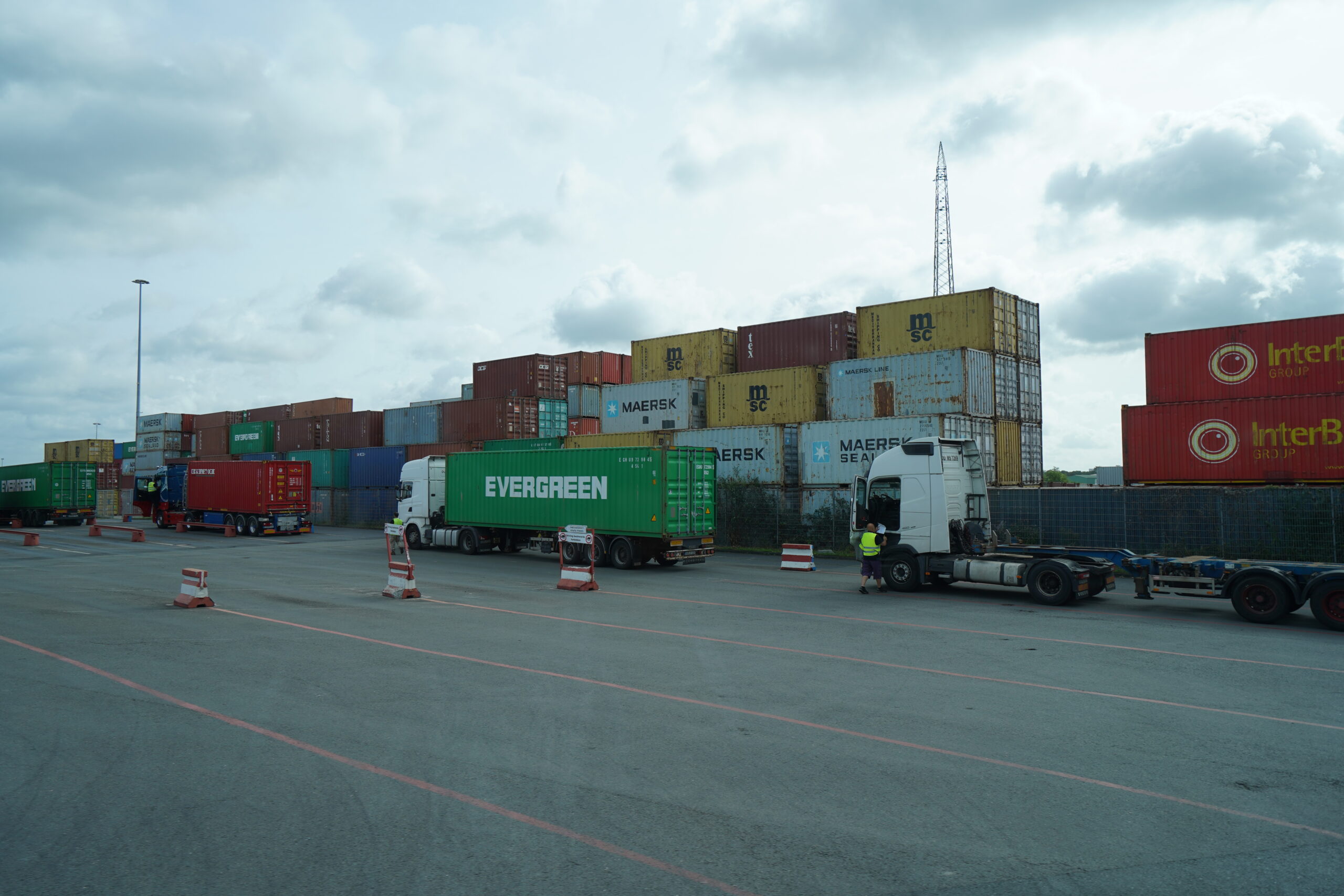
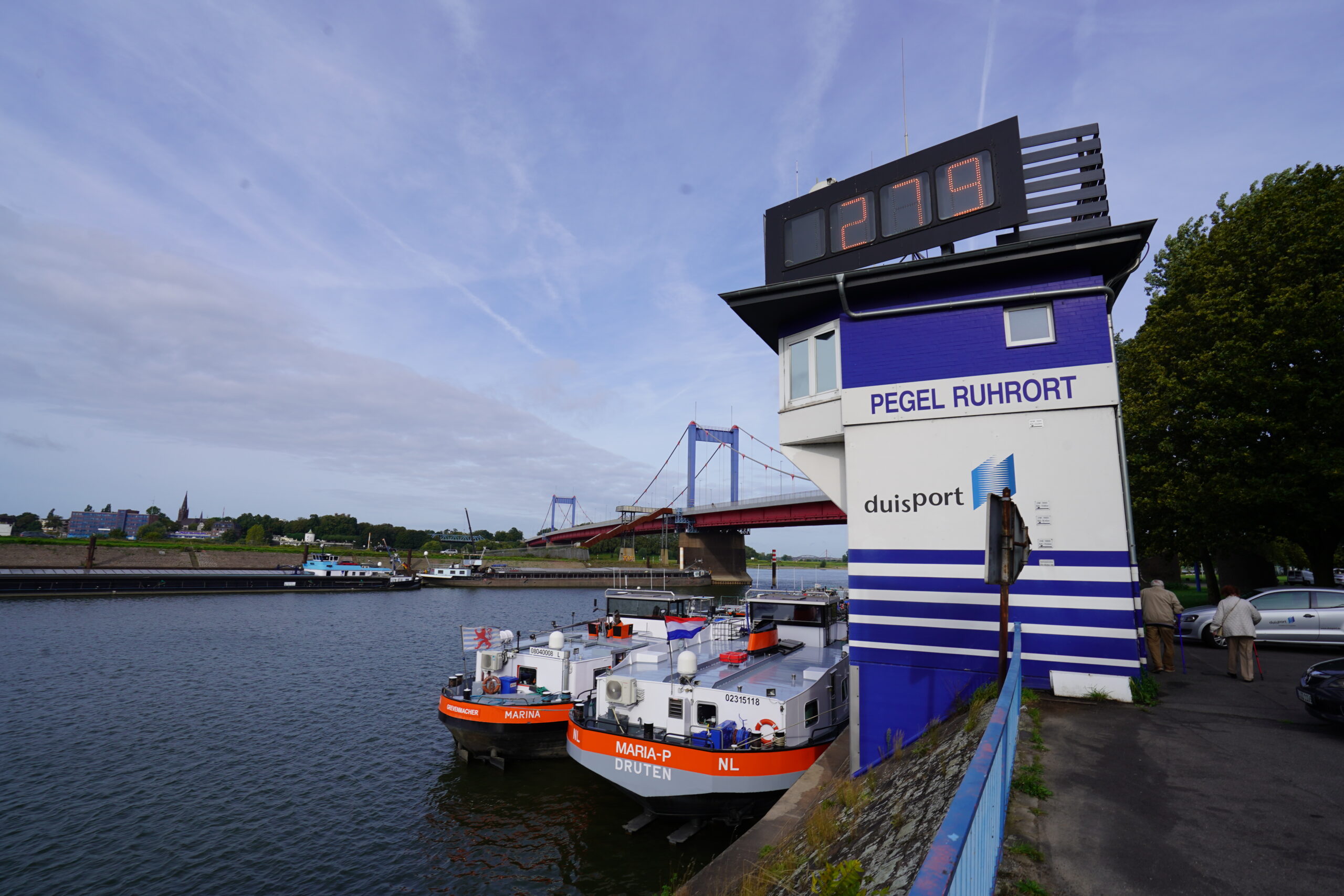
Unknown to many, Duisburg Port in Germany is the largest inland port in the world and the most significant inland port in central Europe. It consists of 22 port basins and its waters cover an area of 180 hectares. Approximately 60 freight trains travel weekly from Duisburg to Chongqing city in China and vice versa, making the Duisburg Port a key hub of the Belt and Road Initiative (BRI). At Duisburg Port, 20,000 ships and 25,000 freight trains and millions of containers are processed annually. On 18 and 19 of September 2023, researchers from our De:Link // Re:Link research project visited the Duisburg Port where we went on a guided bus tour, walking tour and boat tour of the port area.
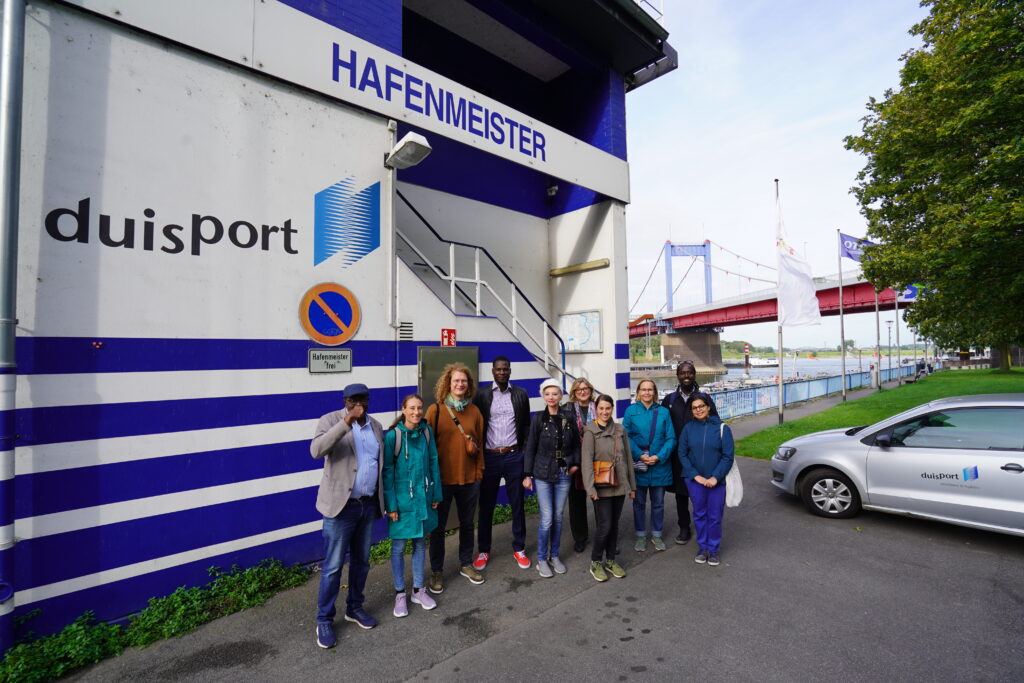
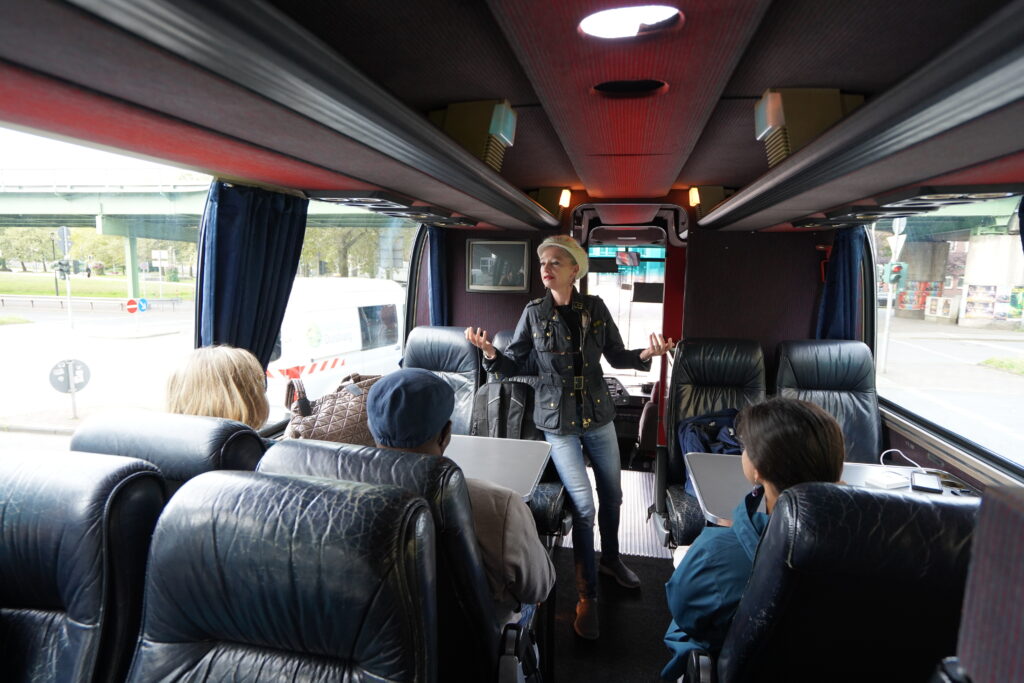
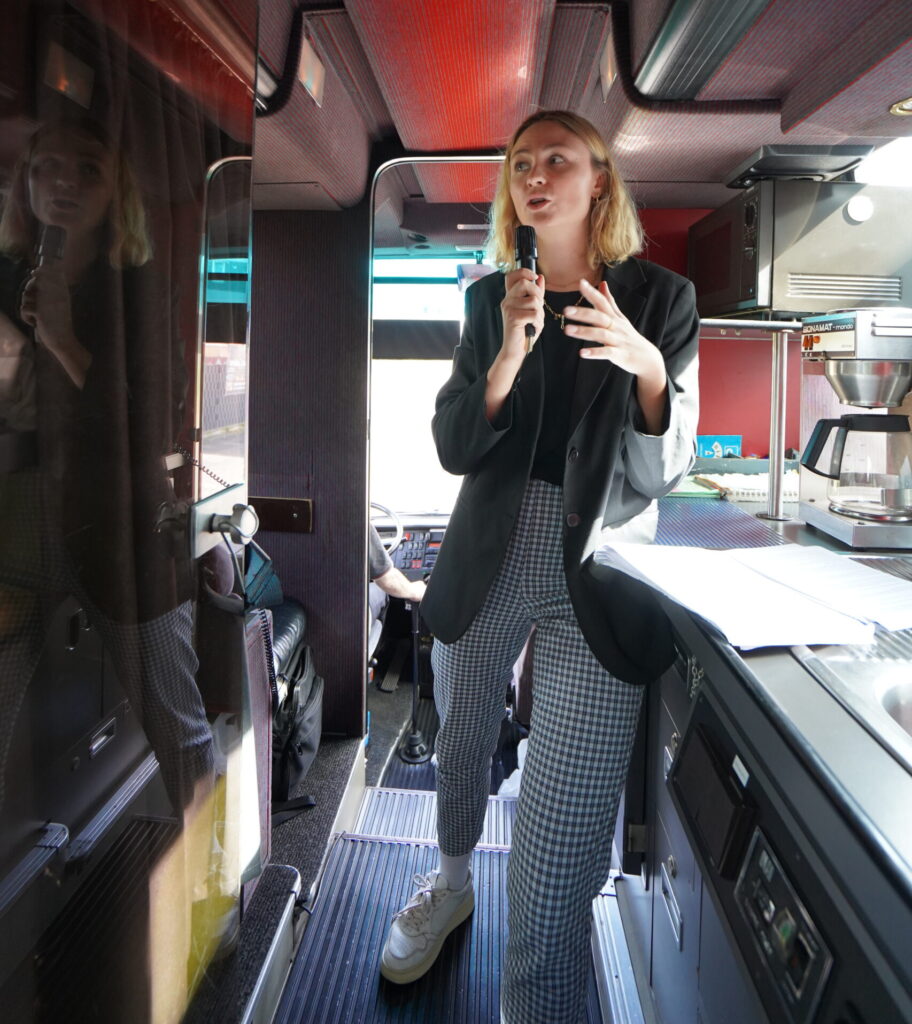
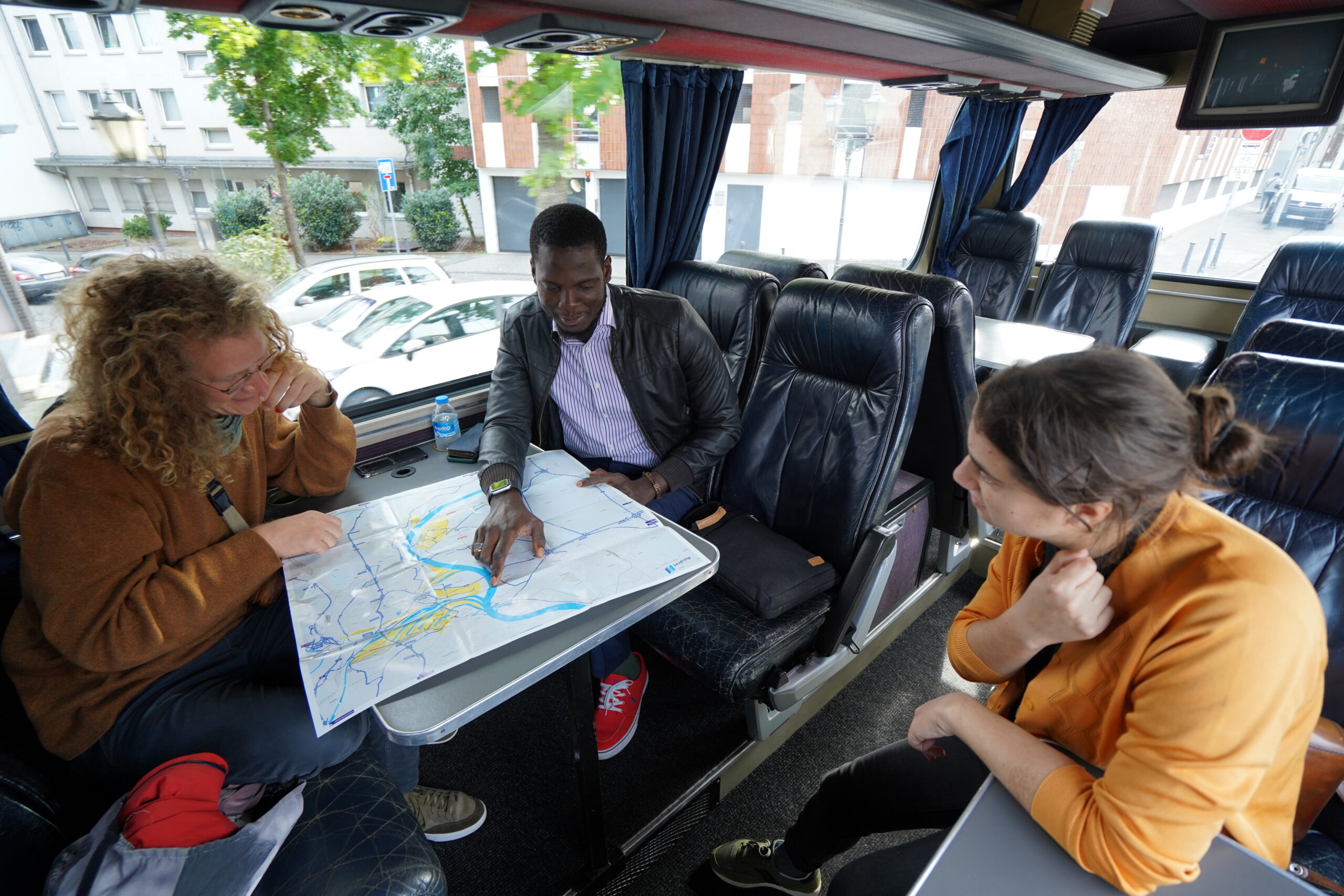
Prof. Dr. Claudia Derichs, the speaker of our De:Link // Re:Link research consortium, guided us during our visit as she is very familiar with the city of Duisburg, its local and international political economy. We kicked off the day with a bus tour in an eye-catching vintage bus that drove us throughout the port. As the bus meandered across the city into the port area, Claudia Derichs gave a summary of the history and most important data about the city of Duisburg and Duisburg Port from its steel production years to its current status as a Eurasian logistical hub.
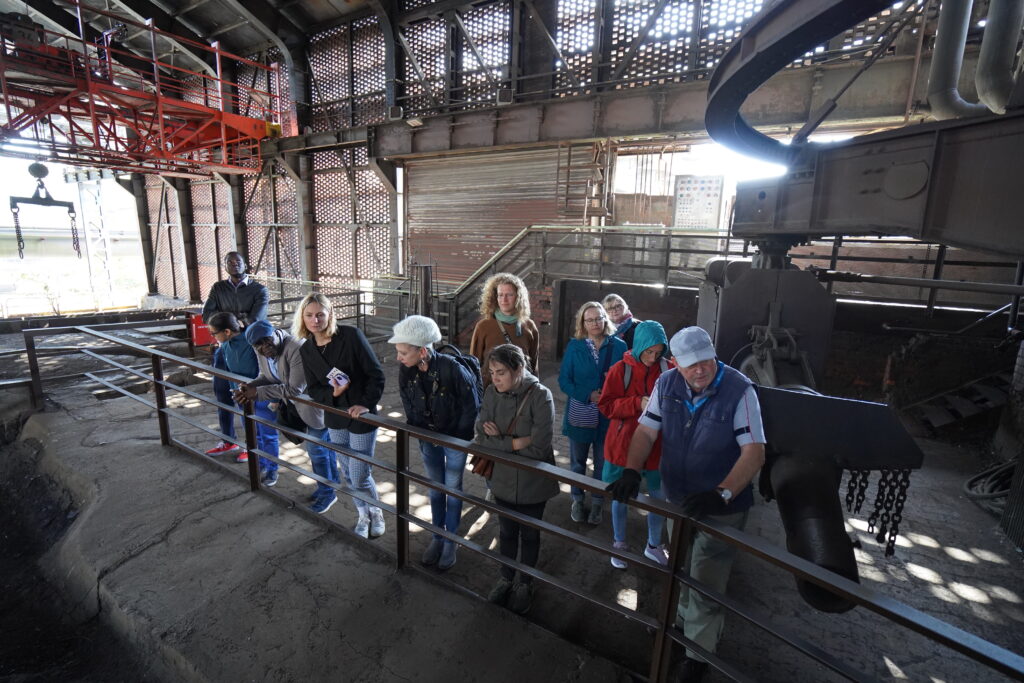
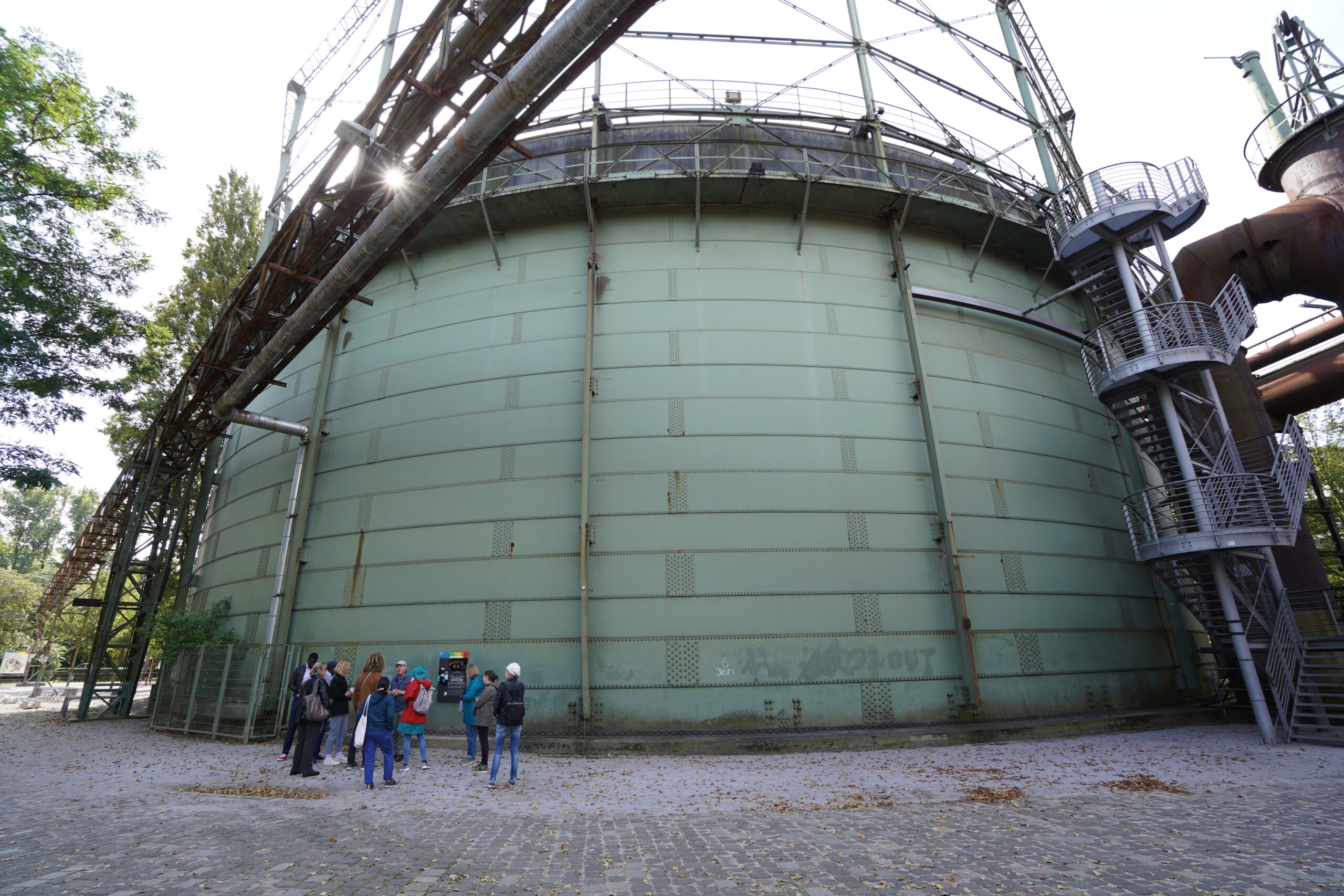
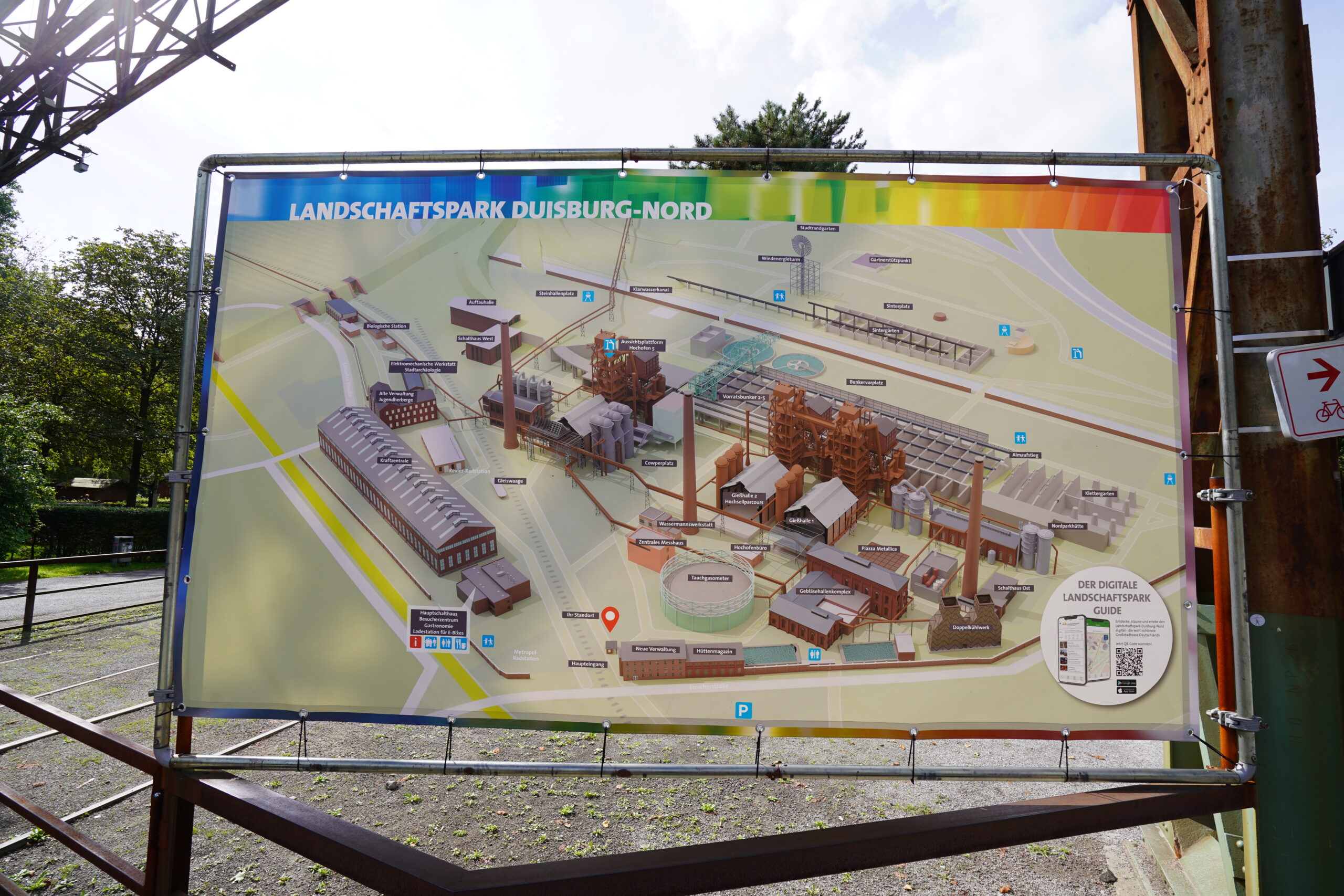
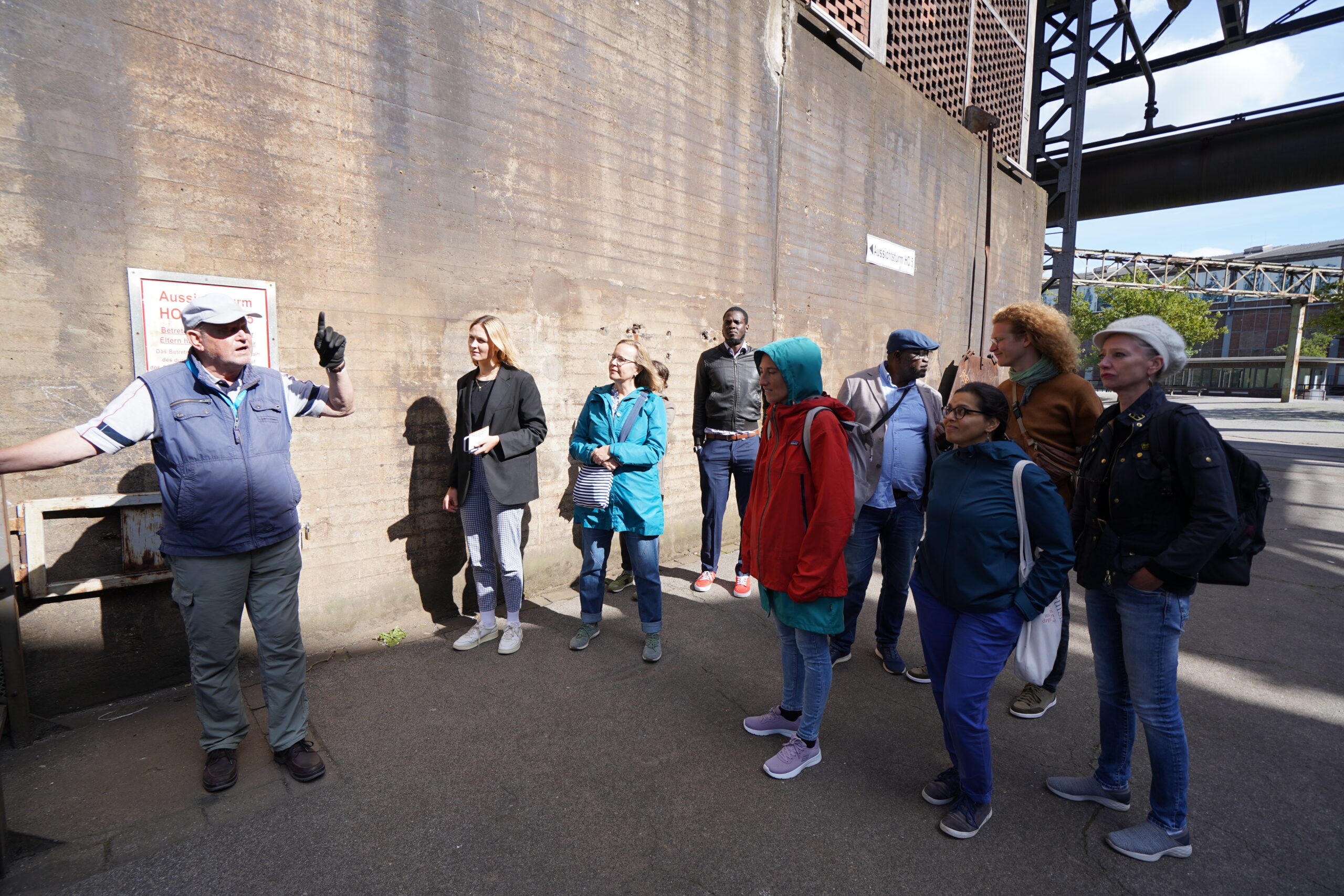
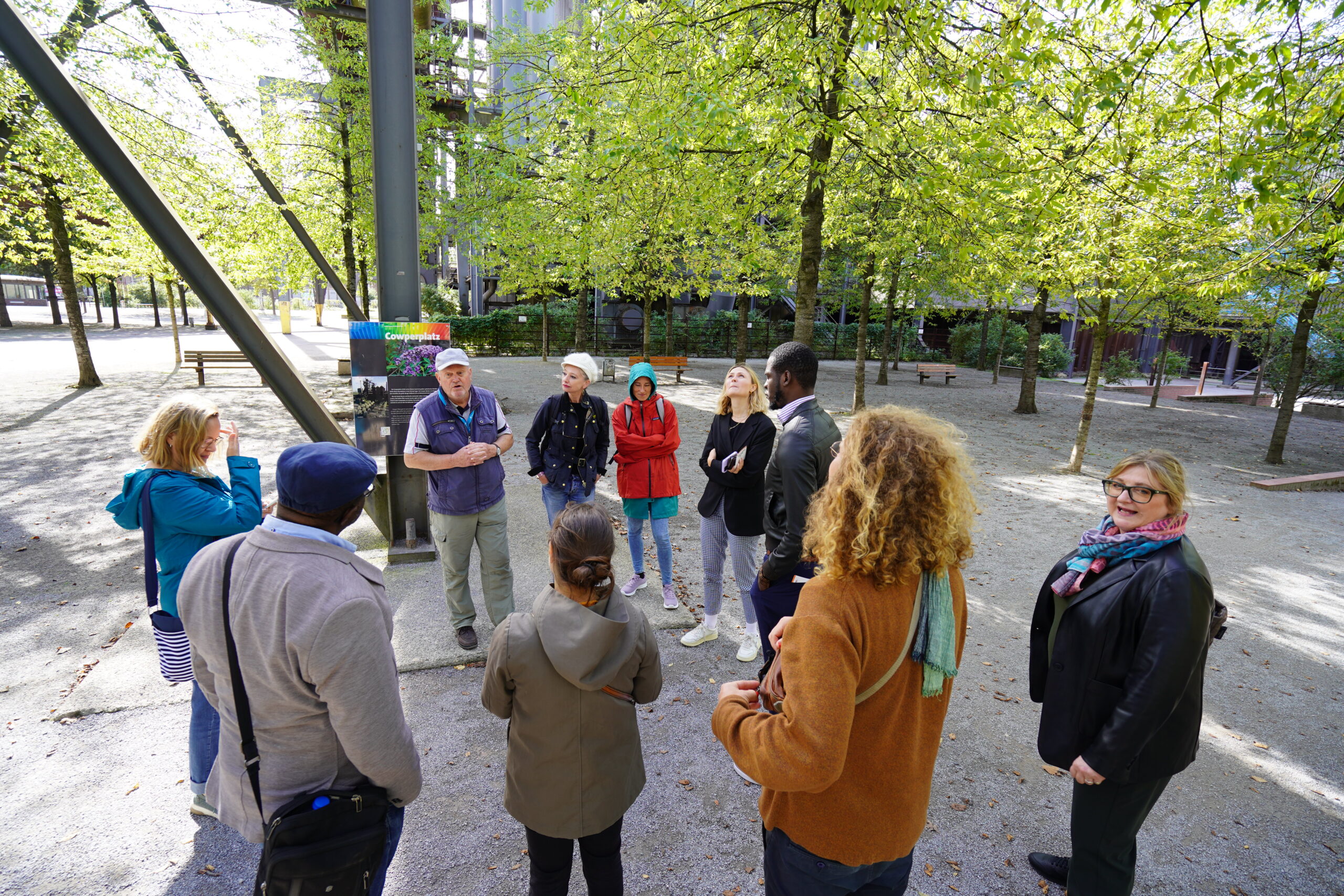
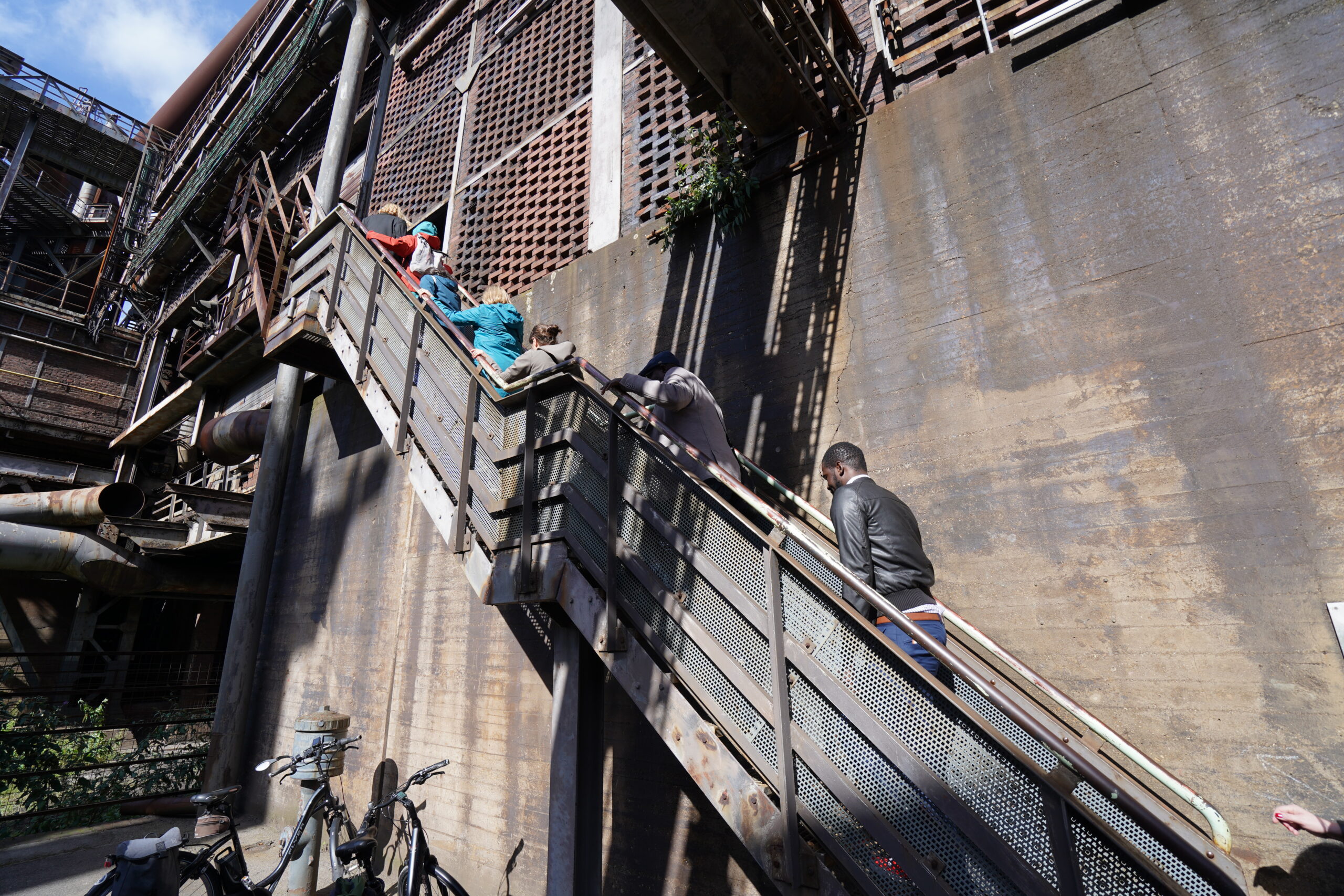
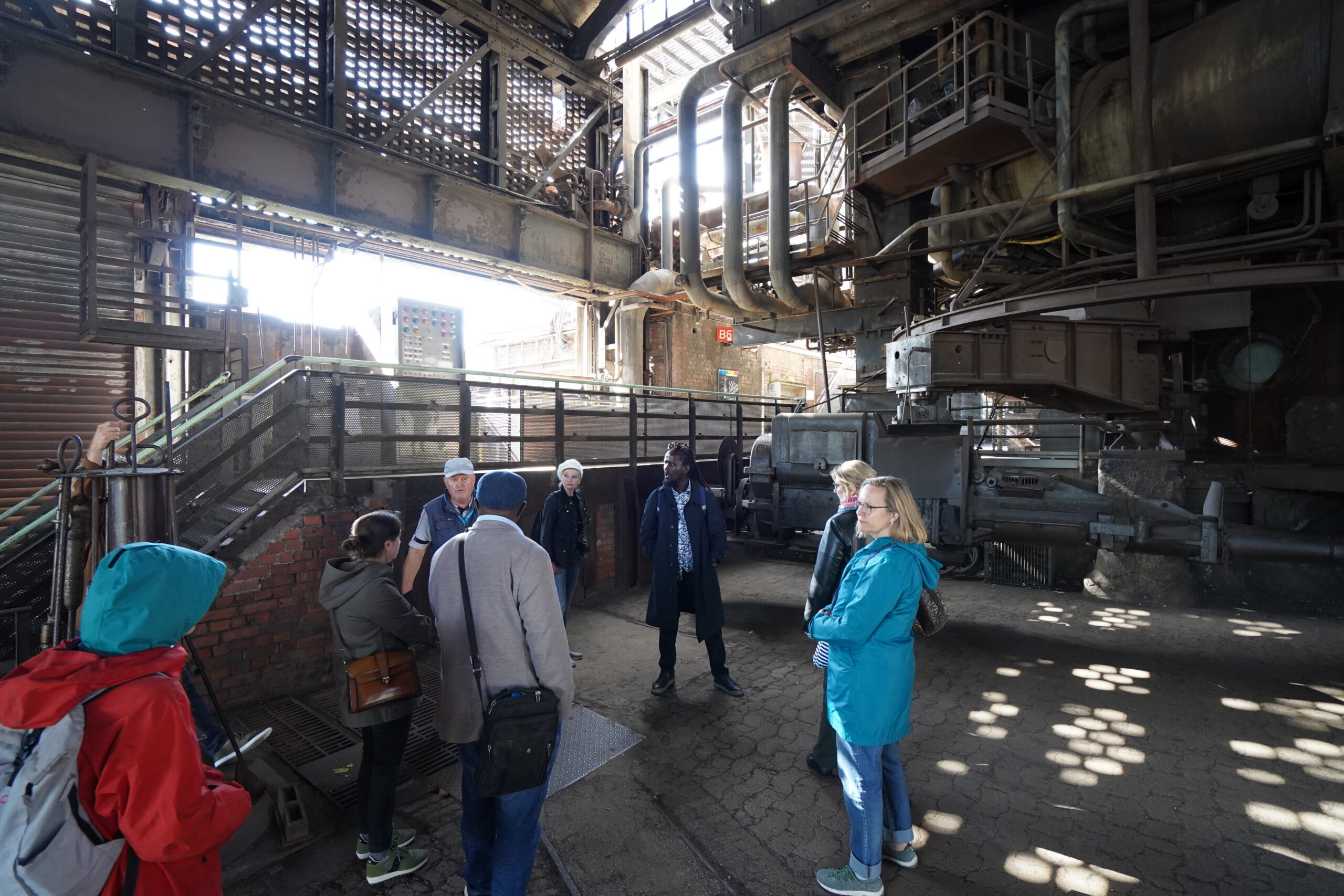
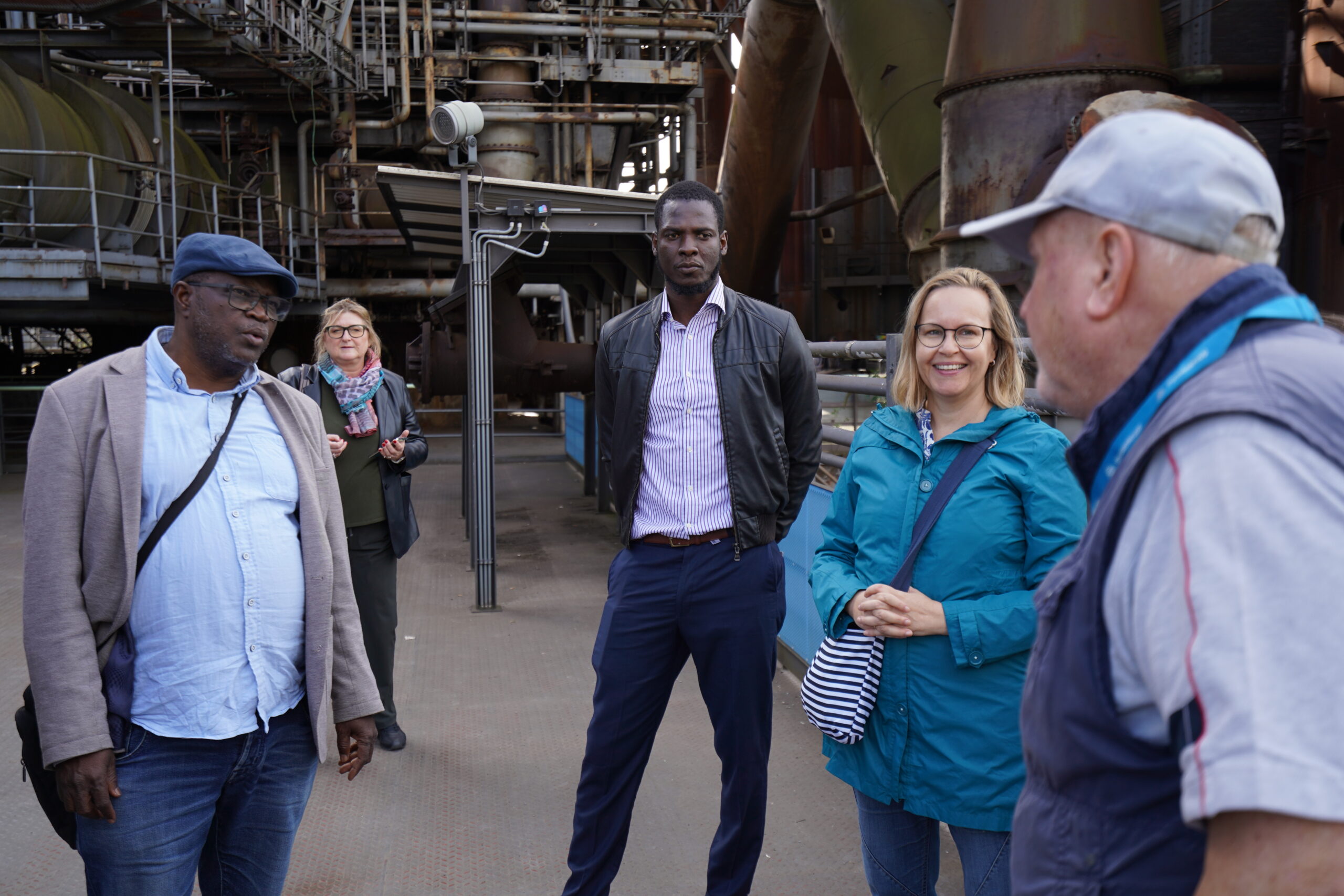
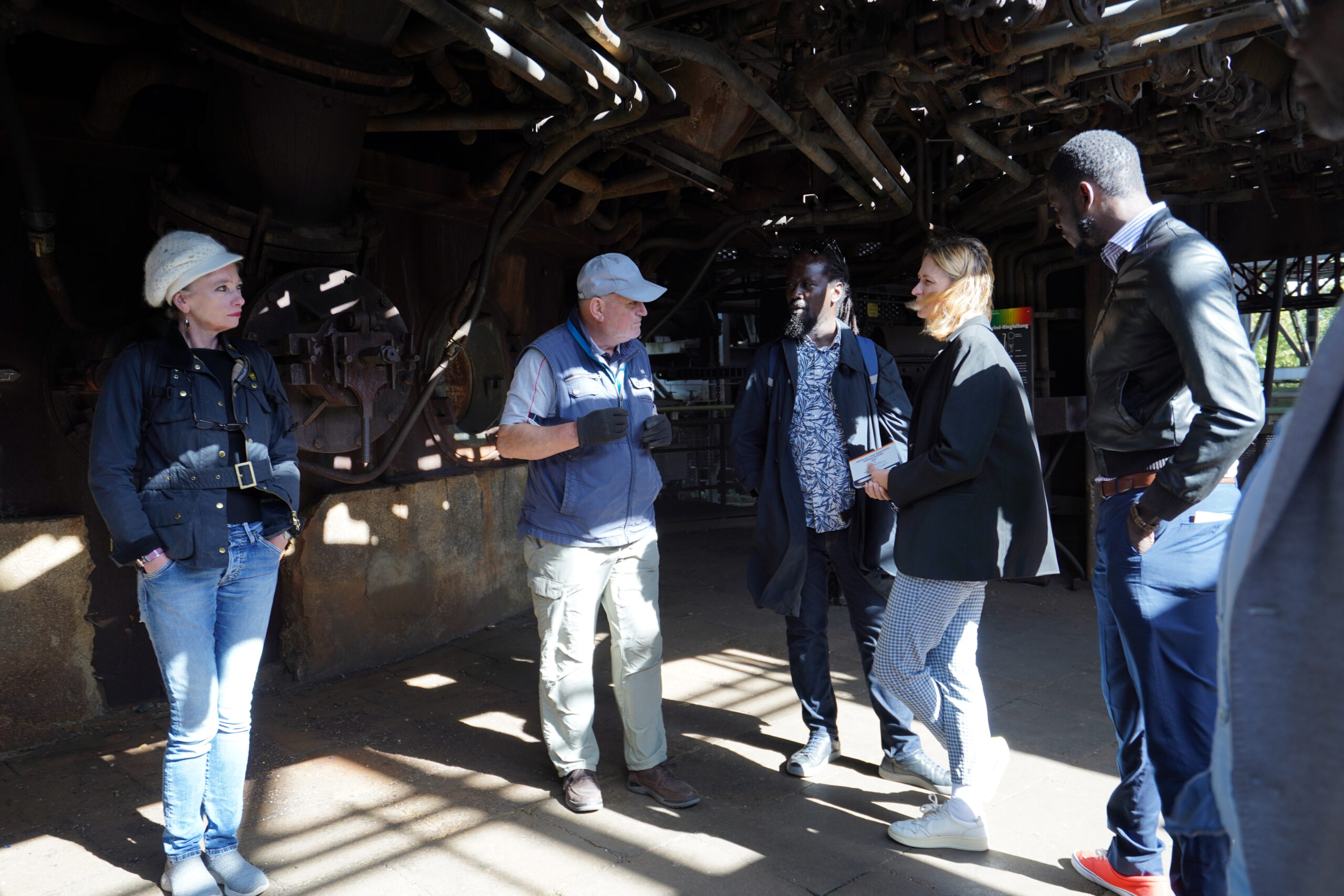
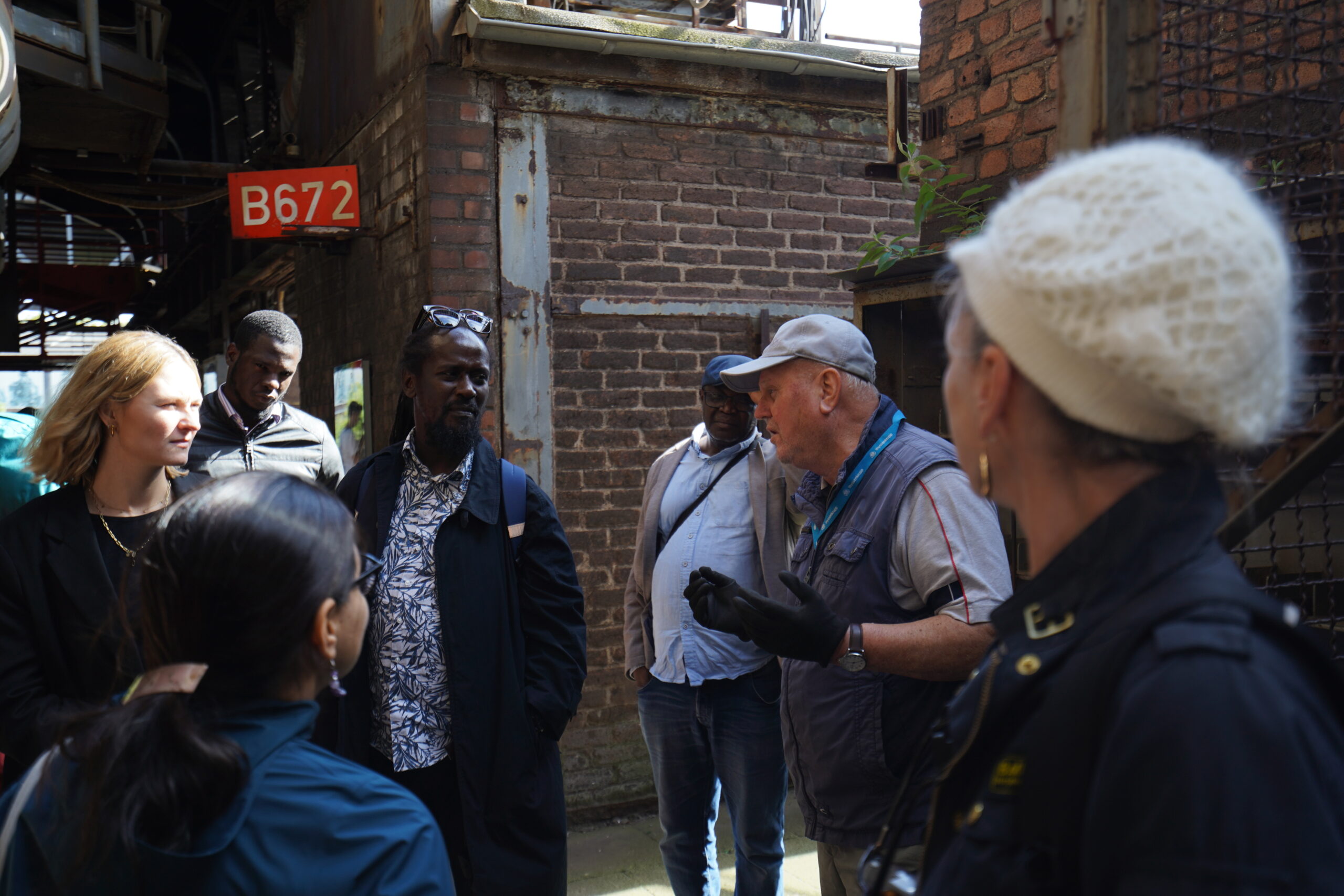
We proceeded with the bus tour to Landschaftspark Duisburg-Nord, a public industrial heritage park memorializing the steel production era in the city. After lunch, a tour guide took us on a walking tour of the expansive former steel production factory. While some parts of the former steel factory have been kept as they were during steel production, others have been converted into different facilities. For example, a former gas tank that was converted into a diving center has become the deepest indoor diving pool in Europe. Former factory buildings have been turned into conference facilities hosting cultural and corporate events.
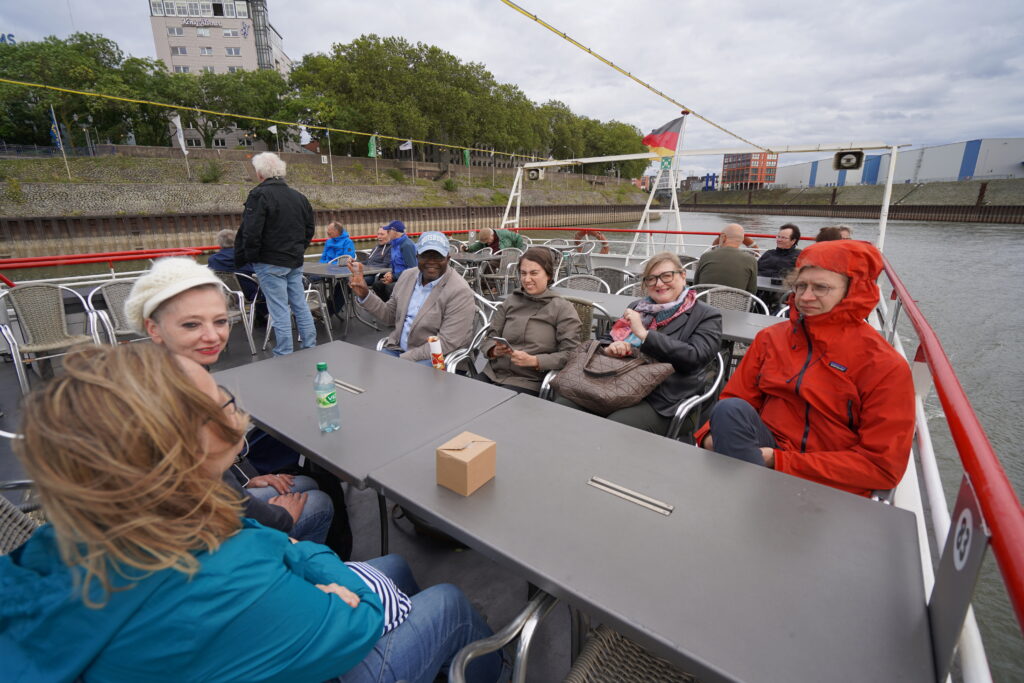
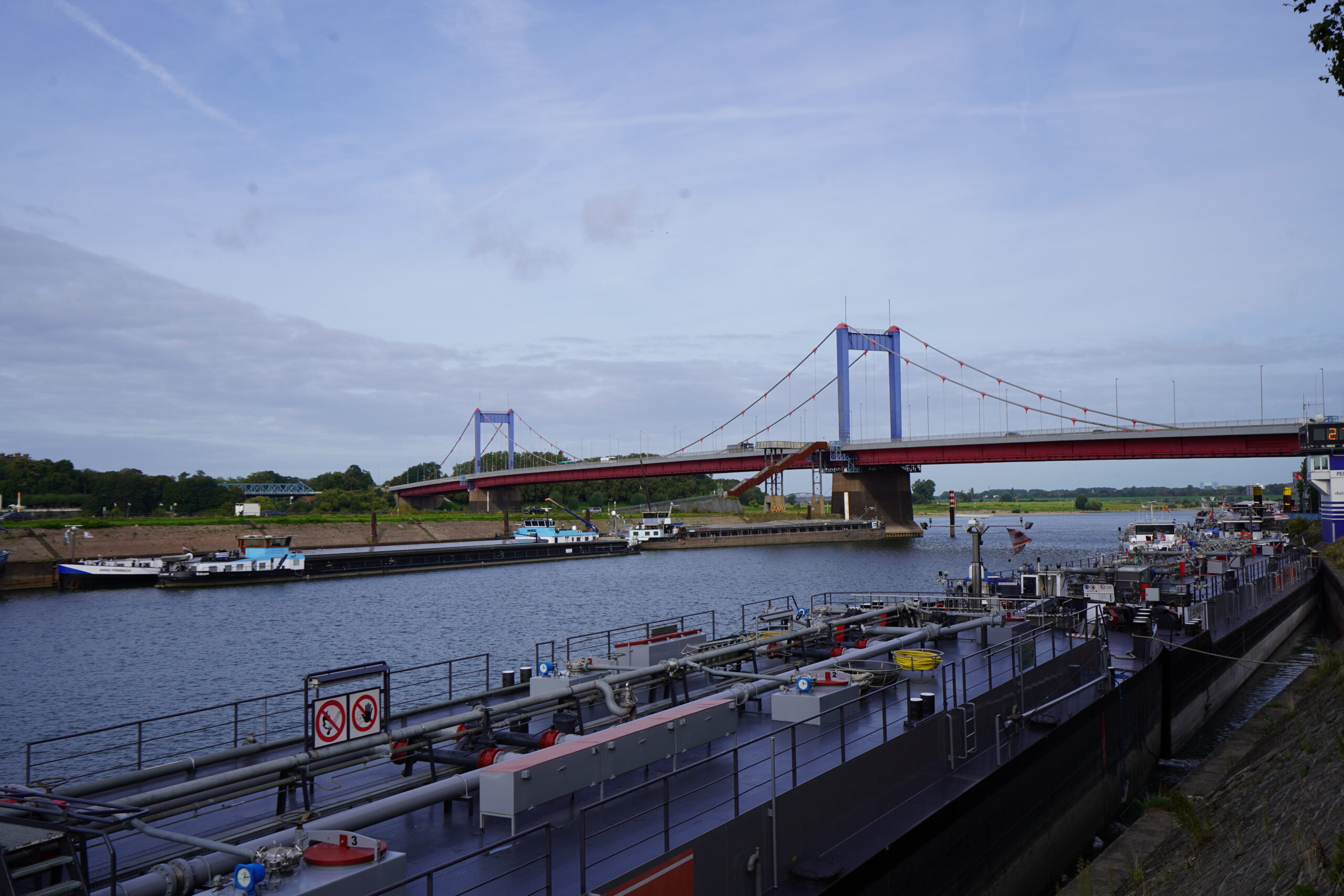
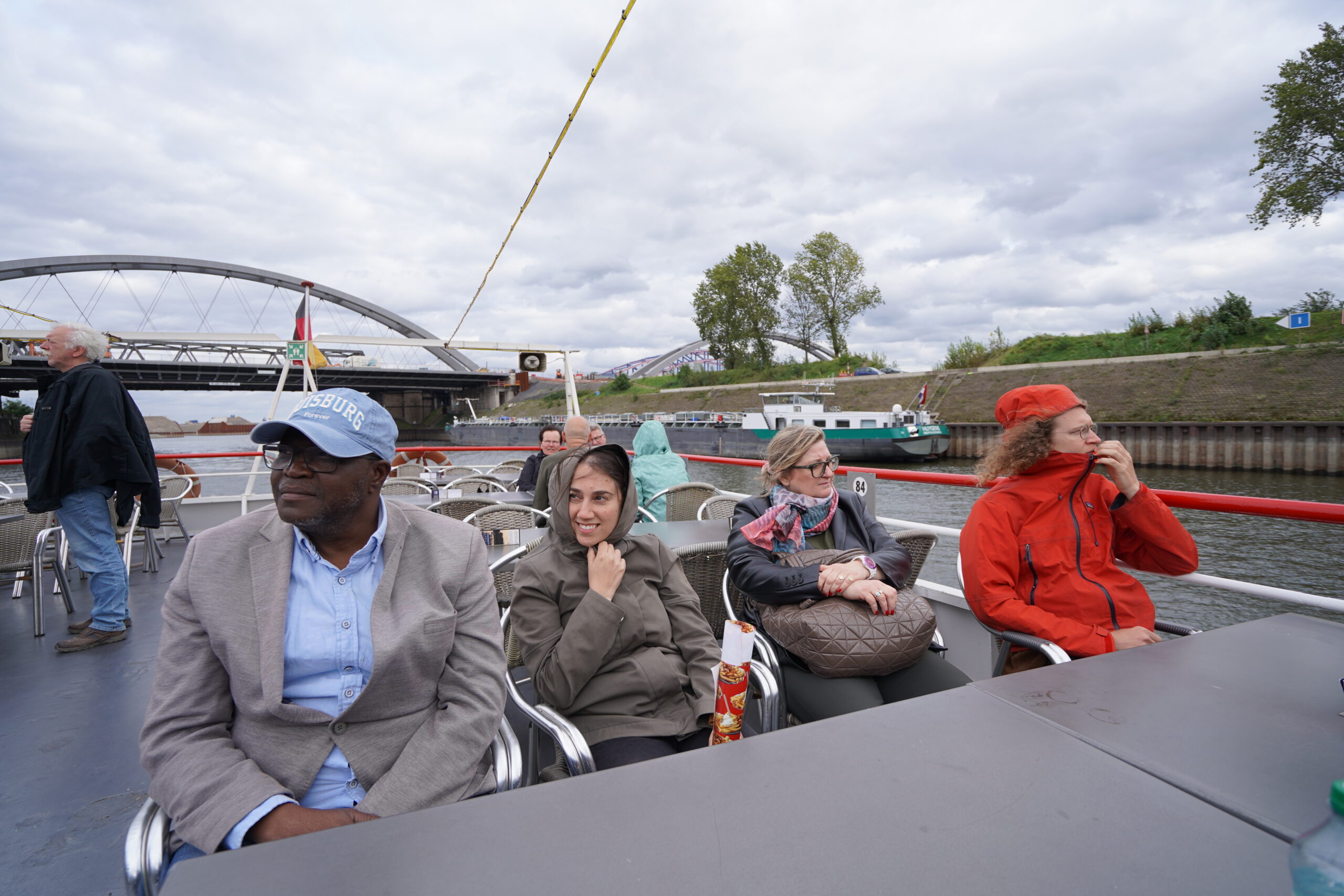
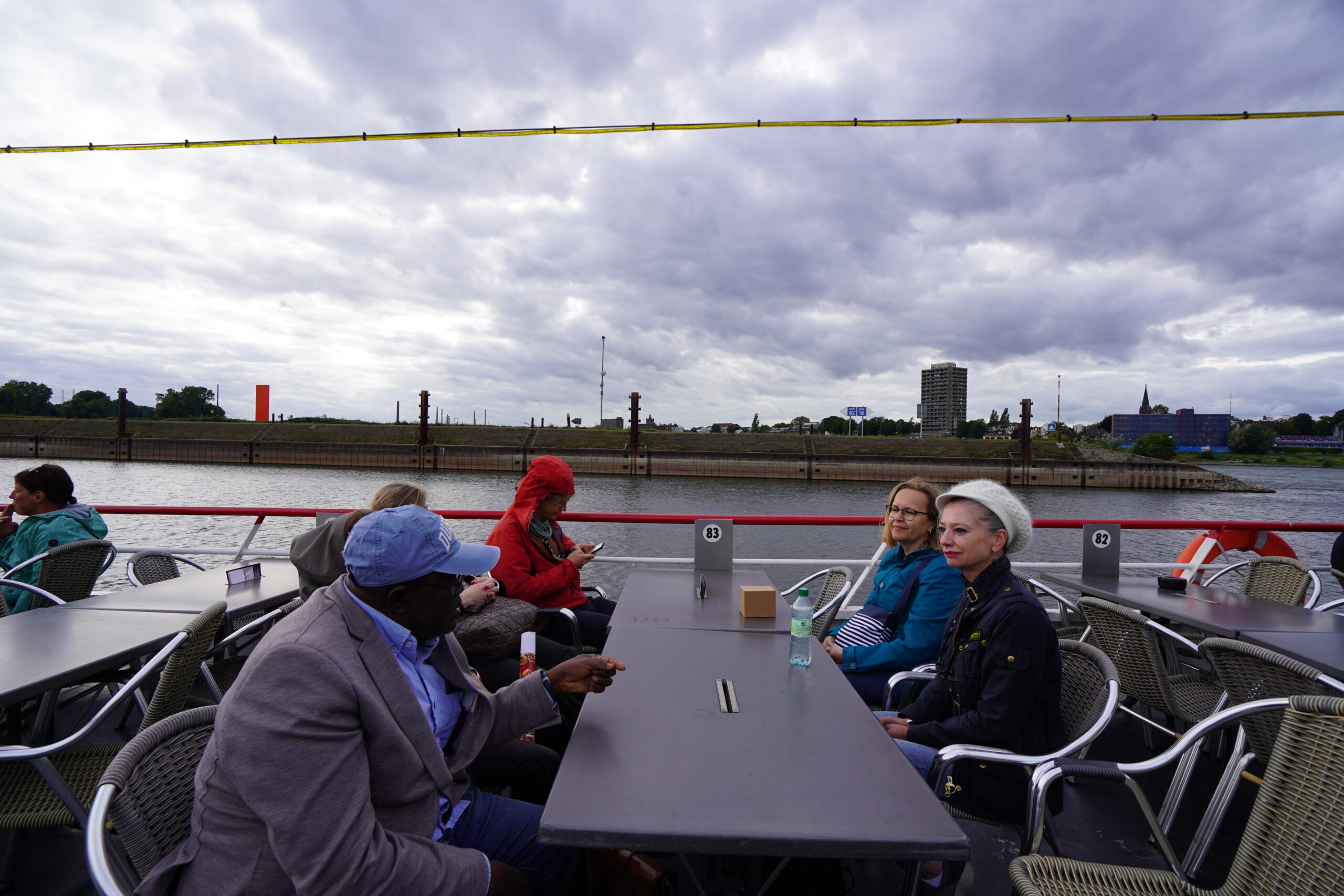
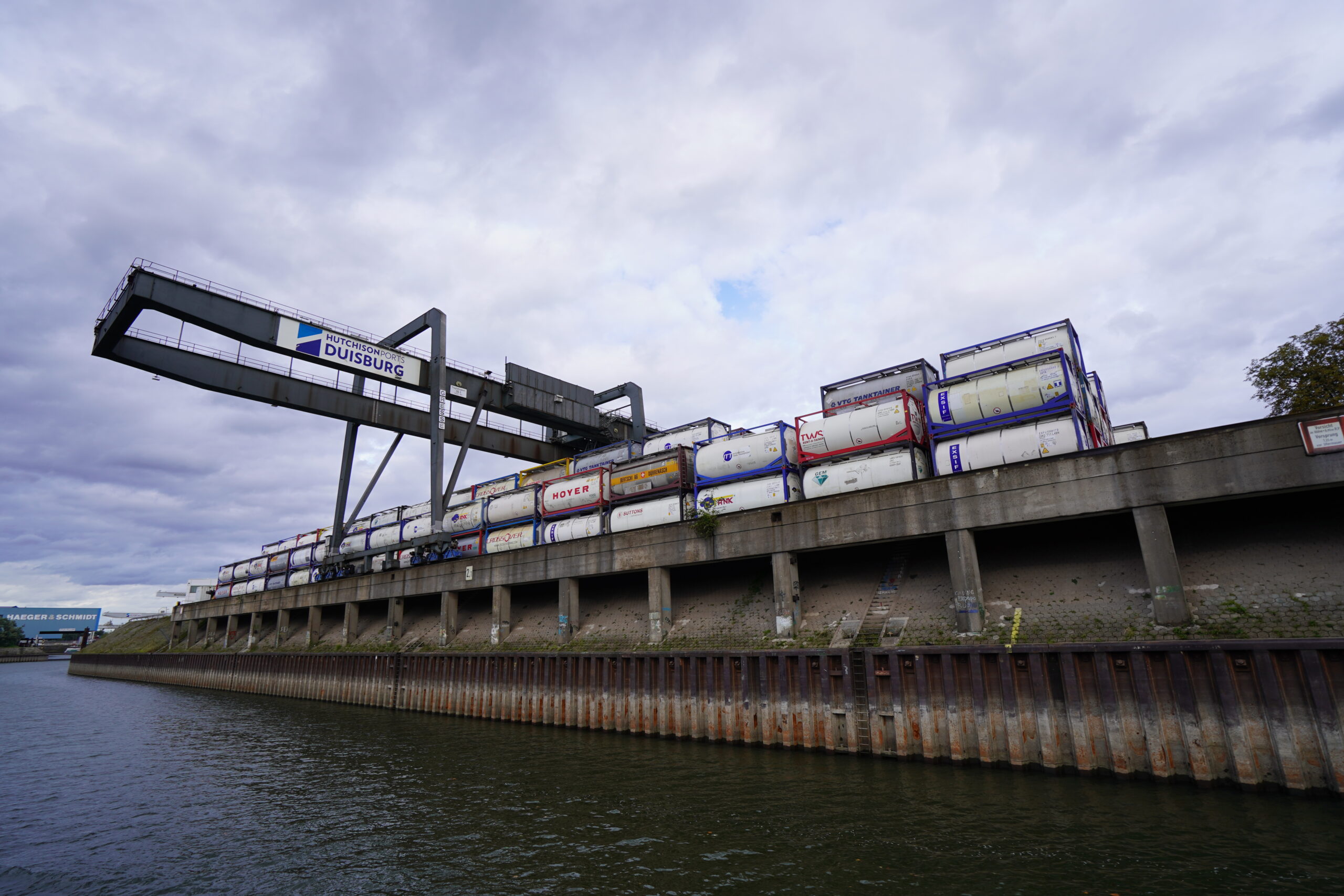
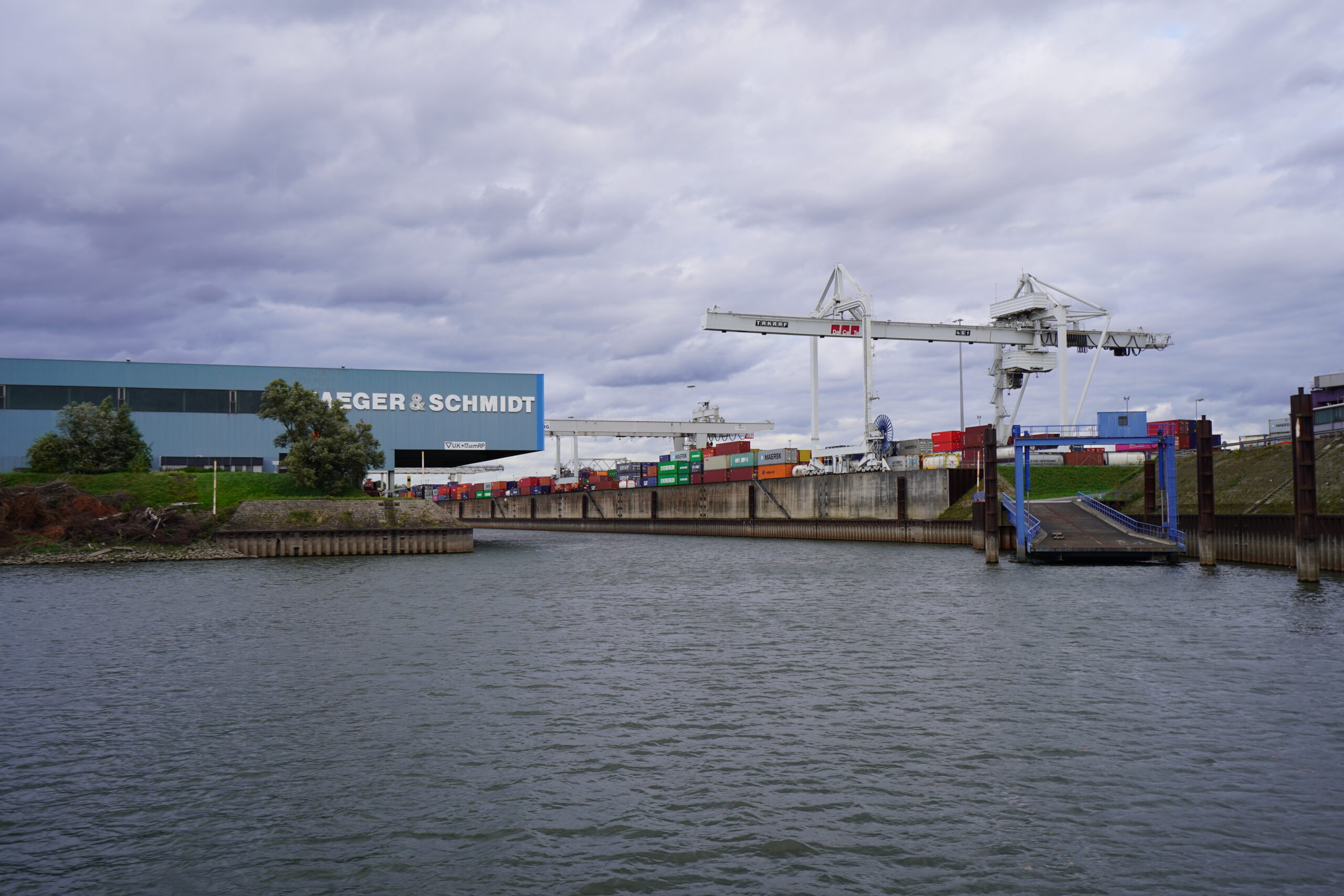
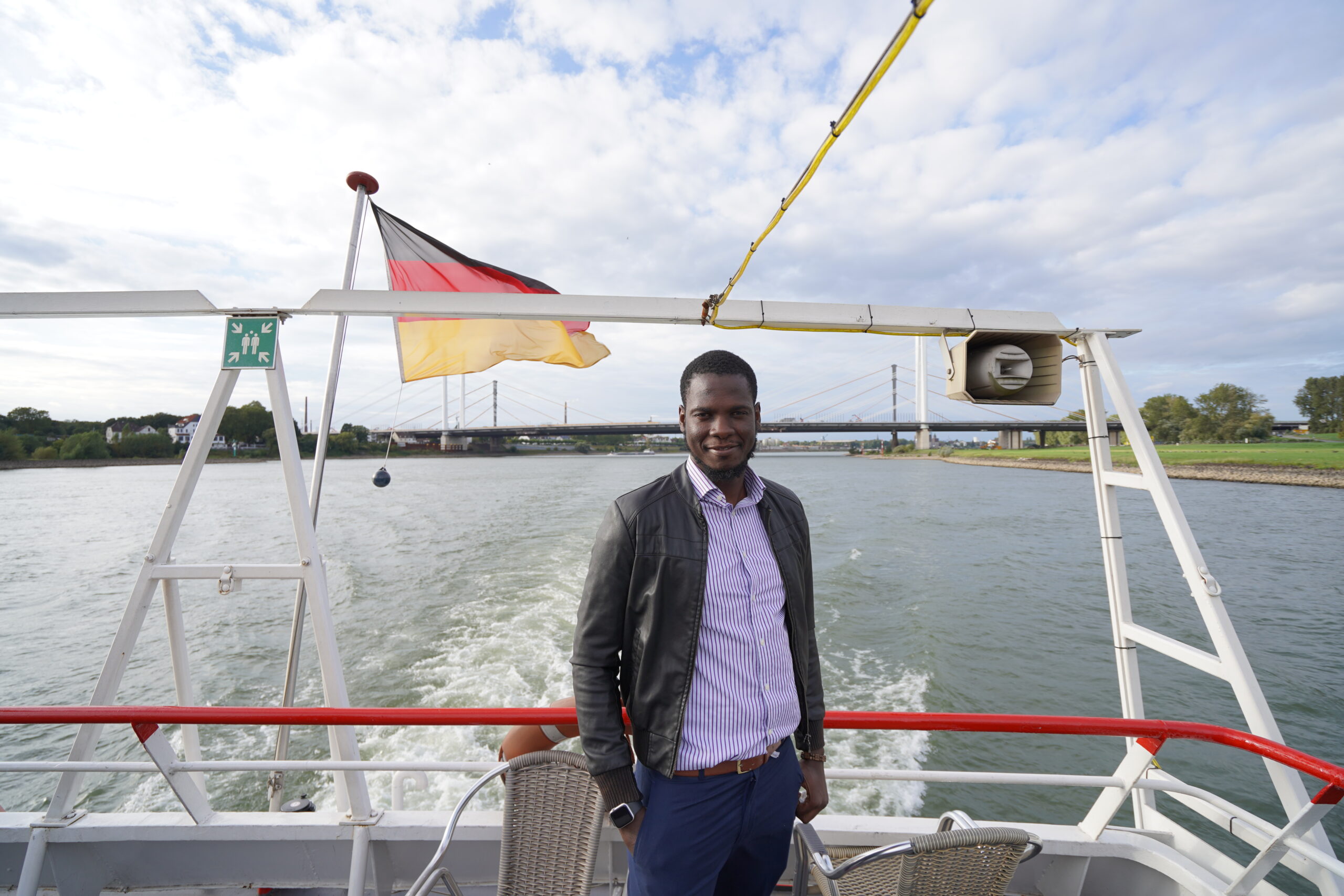
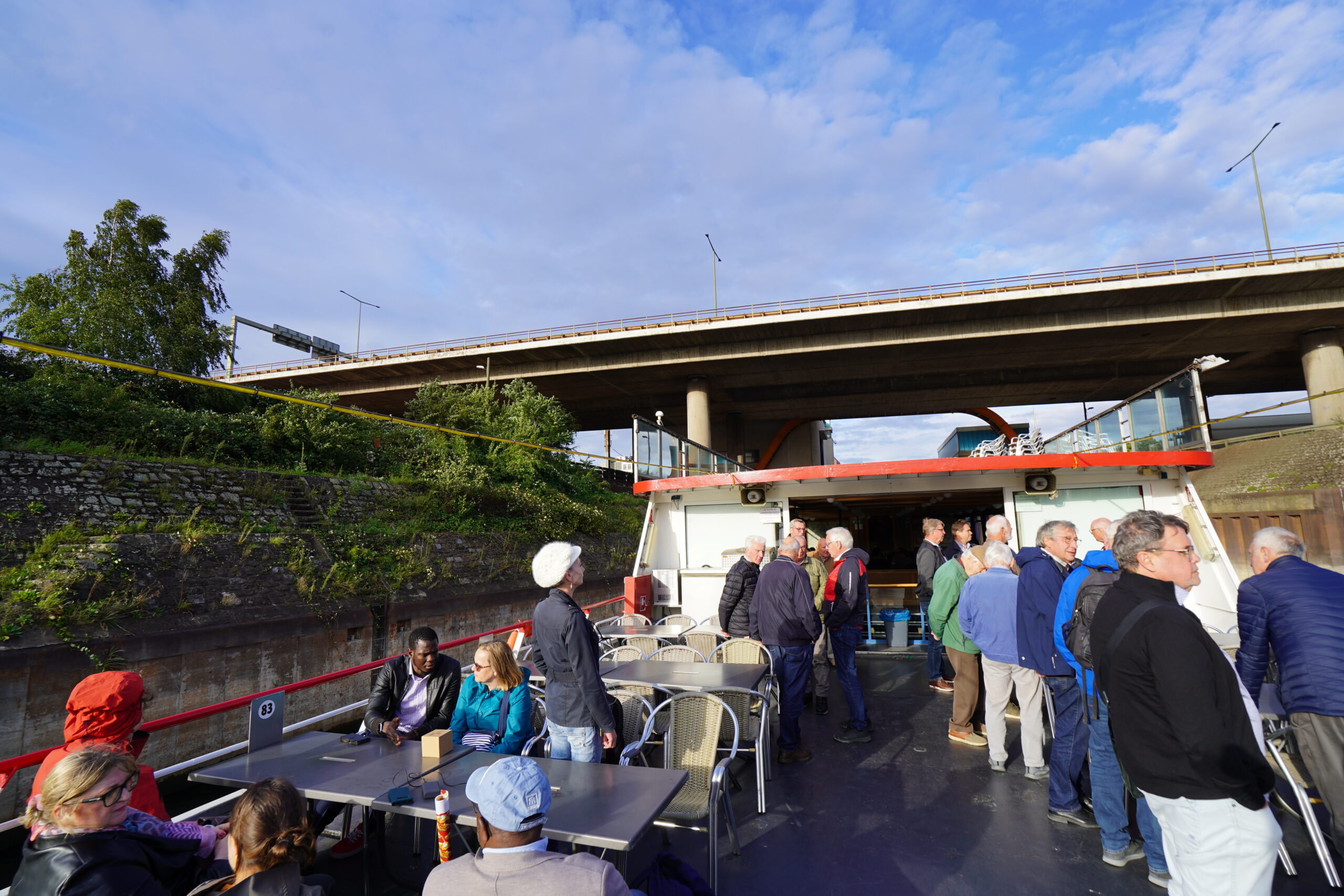
Afterwards, we took a boat that took us on an expansive tour of the Duisburg harbour. The tour guide explained every section that we sailed through while we simultaneously observed cranes, containers, ships, boats, yachts, marine police boats, warehouses, logistics offices, fire-fighting ships and port workers all intertwined into the sophisticated complexity that makes up the worlds largest inland port.
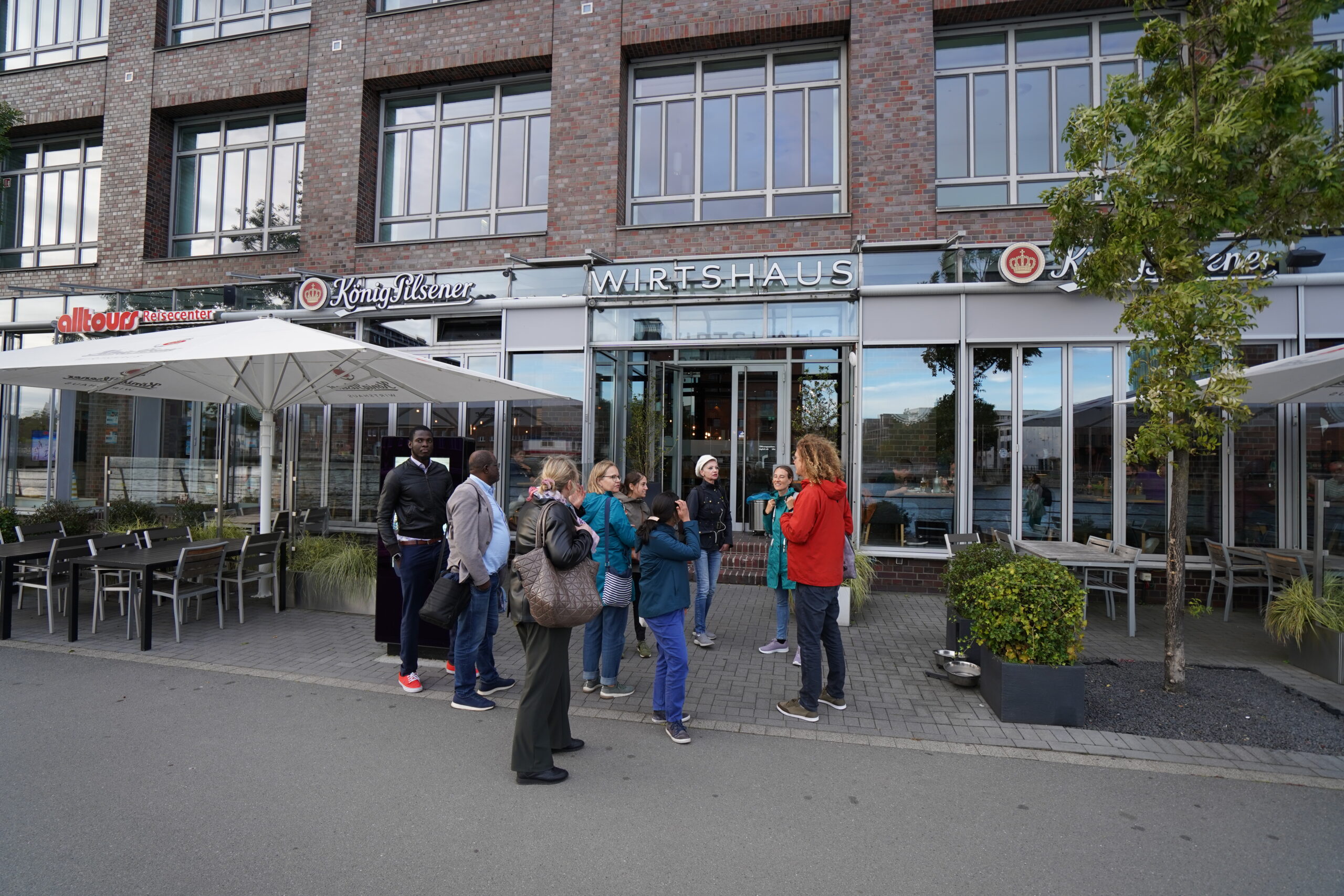
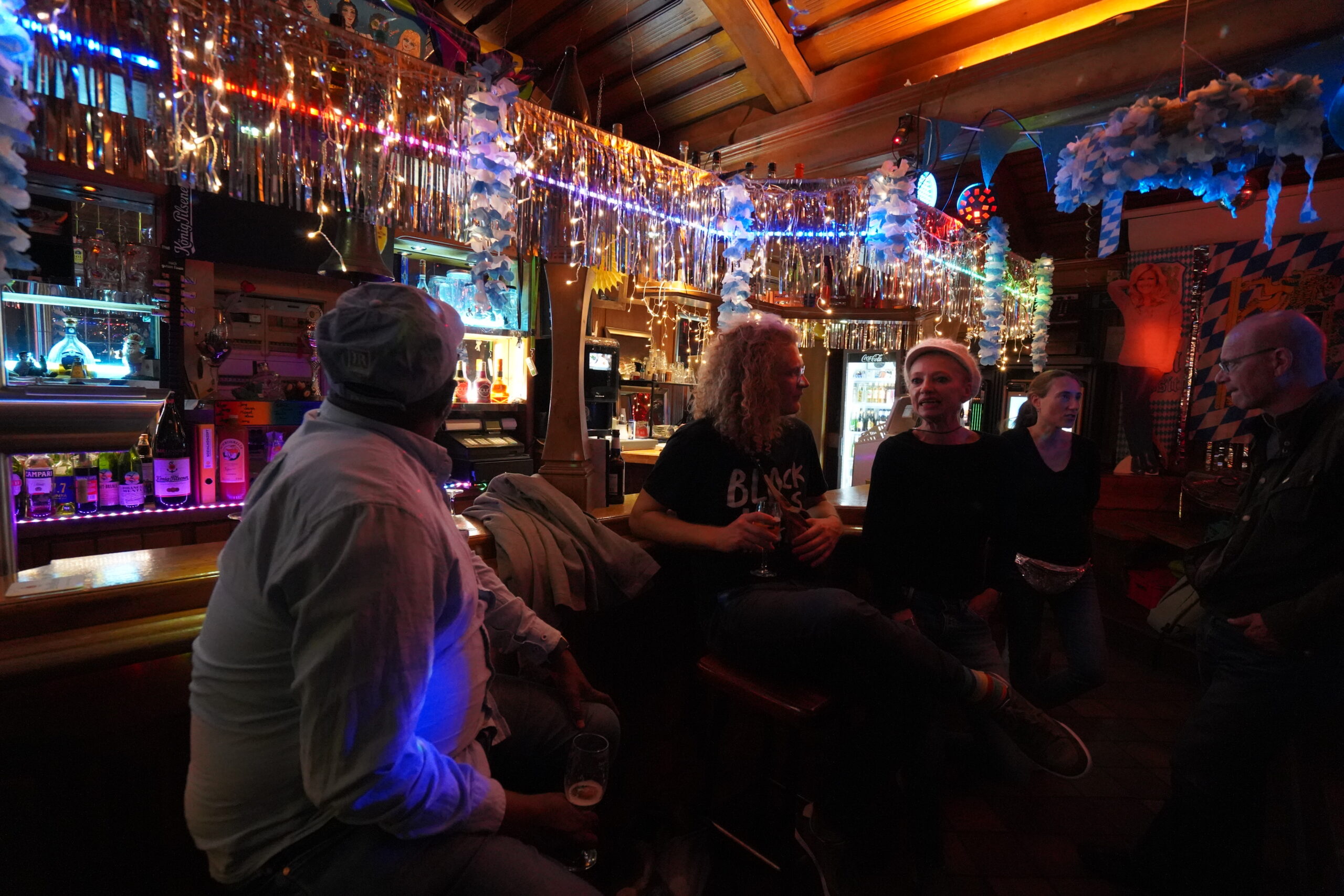
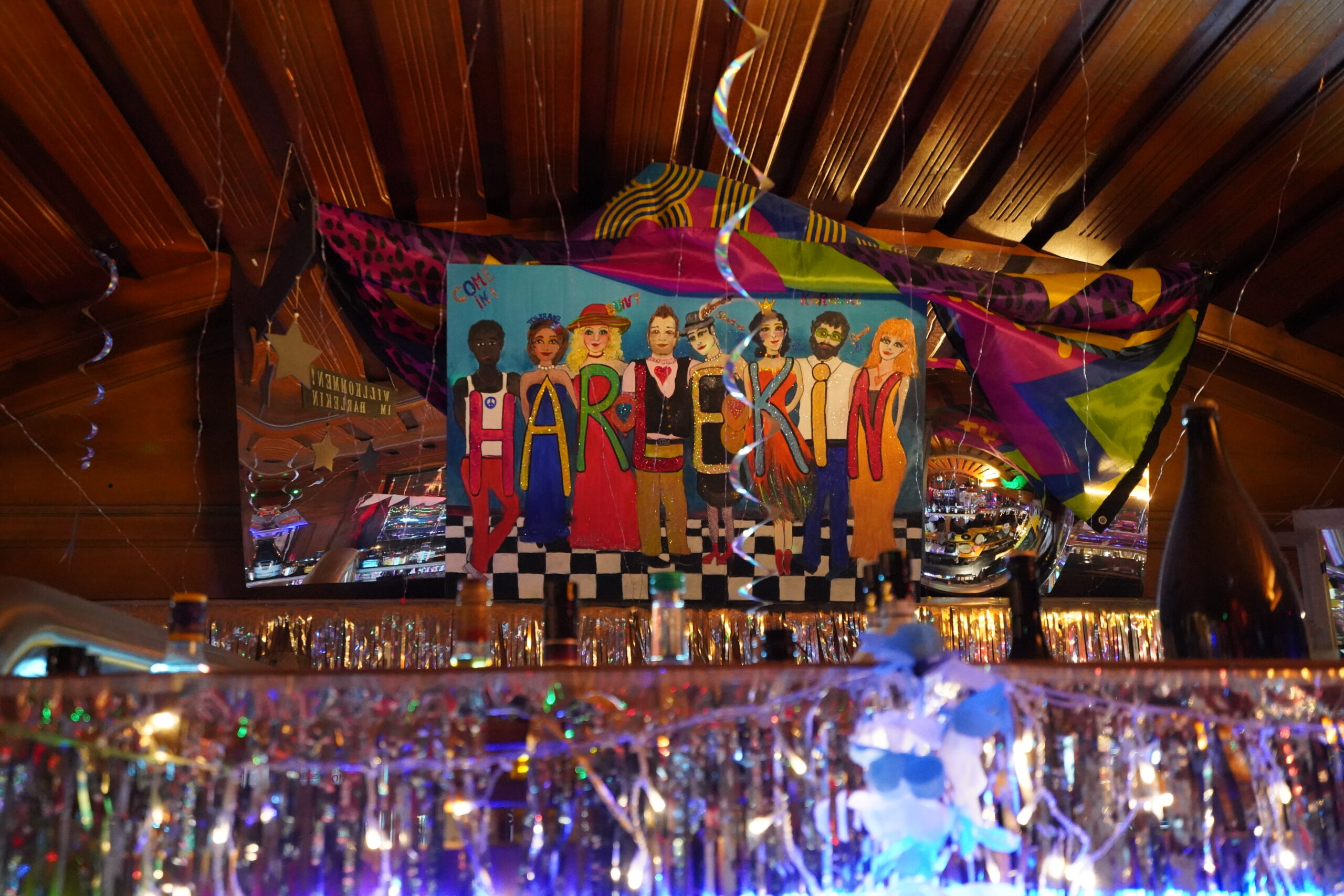
We wound down our visit of the Duisburg Port with conversation, local beer and sumptuous food at the König Pilsener Wirtshaus Duisburg before Claudia Derichs took us on a late night tour of the city and a final stop at a local pub for relaxation and more conversations.
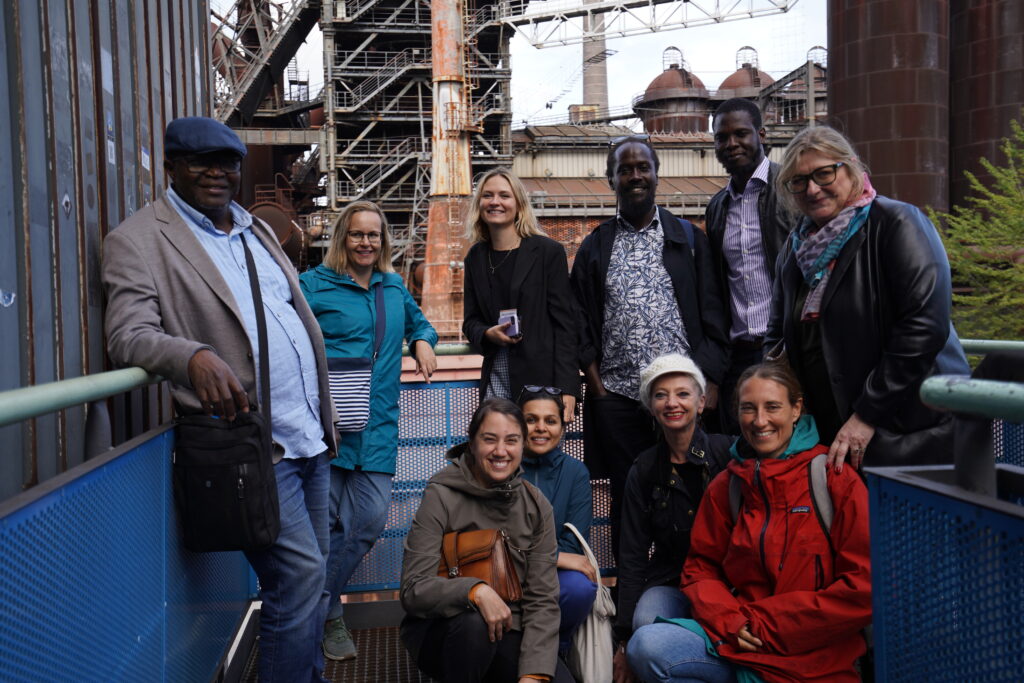
Apart from the researchers based in Germany, two of our international fellows Dr. Ibrahima Niang and Prof. Dr. Adams Bodomo who were in Germany through our De:Link // Re:Link fellowship program also joined us. Dr. Sabine Dorpmüller, the managing director of AGYA at Brandenburg Berlin-Brandenburg Academy of Sciences and Humanities (BBAW) who also serves as a member of the International Advisory Board of our De:Link // Re:Link research consortium also joined us. All logistics of our trip to Duisburg Port were organized by our dear colleagues Amy Visram and Sebastian Großmann, without whom none of all this would have been possible.
All photos © John Njenga Karugia